THE SAMOYED THROUGH THE DECADES. Part 8: The Responsibility of Preservation: What Will Tomorrow’s Samoyed Look Like?
A Heritage We Did Not Create
We did not create this breed. We inherited it.
That is an important distinction. The Samoyed was shaped over generations by people and dogs living in one of the most demanding environments on earth. Long before written standards, kennel registrations and championship titles, these dogs had already earned their place beside the people who depended on them.
They were sled dogs, herding dogs, guardians and companions. They needed strength, endurance, sound feet, a weather-resistant coat and the ability to live closely with human families. Their usefulness was not an attractive historical footnote. It was the reason the breed developed as it did.
Across this series, we have looked at the Samoyed through different periods: its Arctic origins, the early dogs that helped establish the breed, the development of breed type, and the physical and behavioural qualities that still define it. Looking back has been worthwhile. But history also leaves us with a question that matters much more than nostalgia: what are we doing today to make sure there will still be a Samoyed worth preserving tomorrow?
Preservation Is Not Reproduction
Preserving a breed does not simply mean producing puppies that look recognizably like their parents. Reproduction keeps a population going. Preservation asks us to think about what we are carrying forward.
A pedigree can tell us where a dog came from, but it cannot make a breeding decision for us. A collection of impressive names and titles does not automatically guarantee sound structure, good health, stable temperament or longevity. Those qualities have to be evaluated in the actual dogs, their relatives and, whenever possible, the generations that follow.
Modern breeders have access to information that earlier generations could only have wished for: health screening, genetic testing, detailed pedigrees, population data and a much better understanding of inheritance. These tools should help us make more thoughtful decisions. They are not magic certificates, and no test can promise a perfect puppy. Their value lies in using the information honestly and in context.
Preservation also means being prepared to make difficult choices. Not every attractive dog should be bred. Not every successful show dog is necessarily a suitable breeding animal. And not every planned mating needs to happen simply because it has been discussed, advertised or eagerly anticipated.
Beauty Must Have a Purpose
The Samoyed is a beautiful breed. There is no need to pretend otherwise; that unmistakable smile and magnificent coat are often what first catch a person's attention. But beauty should be the expression of a well-made, healthy and capable dog—not a substitute for one.
The Canadian Kennel Club standard describes the Samoyed as essentially a working dog and emphasizes strength, agility, dignity, grace and endurance. It calls for a heavy, weather-resistant coat of good quality rather than simply quantity. It also stresses balance and soundness. These are not decorative details. They are reminders of the dog beneath the presentation.
A spectacular coat cannot correct weak construction. A beautiful head cannot compensate for inefficient movement. A fashionable outline cannot replace sound feet, good muscle, stamina or a body that is comfortable doing what a Samoyed was developed to do.
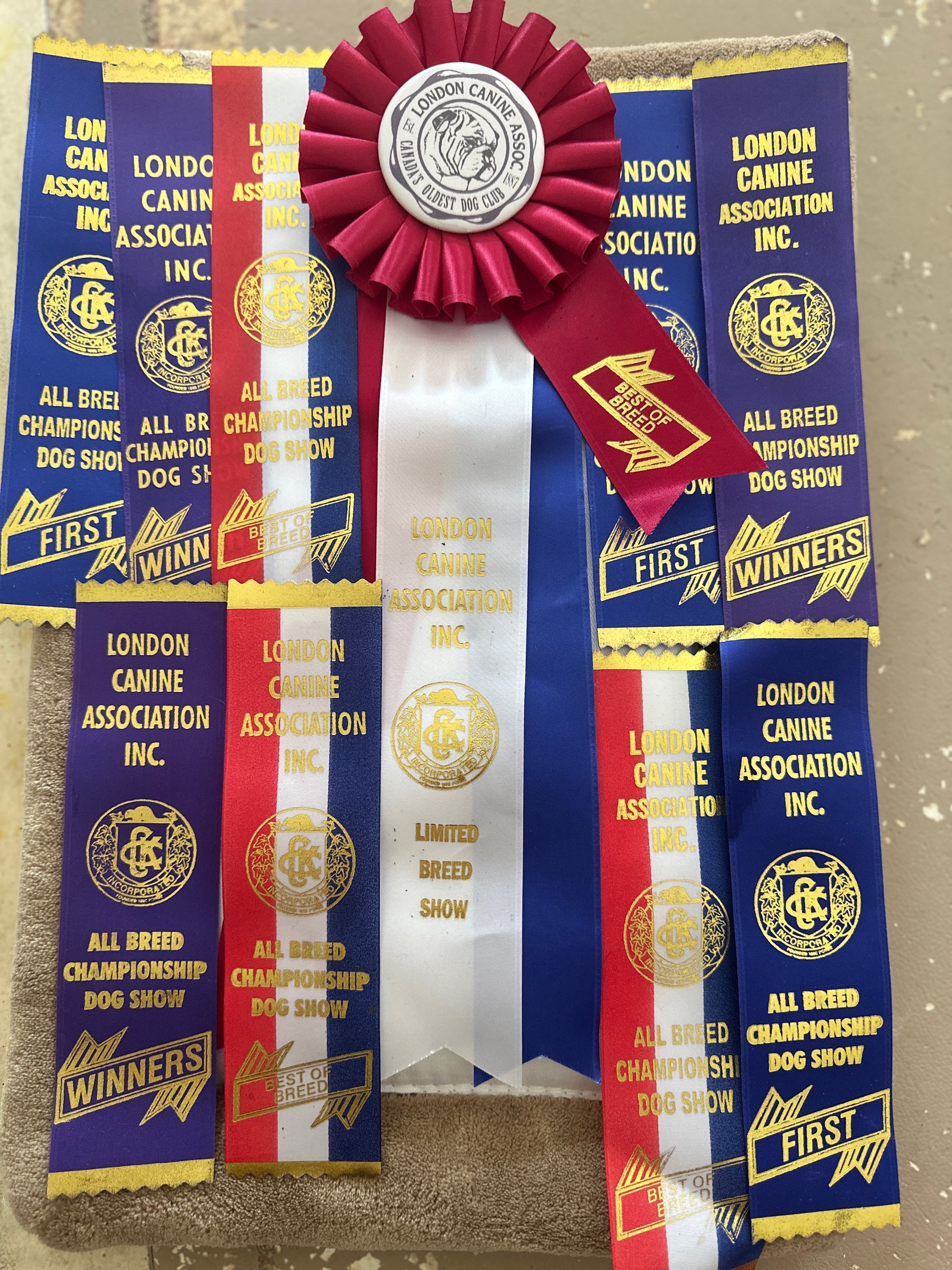
The show ring can be a useful place to assess a dog against a written standard and to learn from experienced breeders and judges. Titles can recognize achievement. But a ribbon is one piece of information, not a complete evaluation of a dog's value to the breed.
I want to see a Samoyed that can enjoy a show weekend and still be perfectly capable of joining its family for a long walk, a hike or a day outdoors. The coat may catch the light, but the dog underneath it must remain the priority.
The Dog Behind the Pedigree
Responsible breeding begins with the individual dogs. We need to look beyond what is immediately visible and ask practical questions about health, temperament, structure, movement, longevity and the history of the lines involved.
Health testing is an essential part of that responsibility. For Samoyeds, recommendations from national breed organizations include evaluations such as hips, cardiac health and eyes, as well as relevant DNA testing. The exact recommendations, testing protocols and available registries can vary by country and may change as veterinary and genetic knowledge develops. Breeders should follow current guidance from their national kennel club and breed organizations, and discuss individual results with qualified veterinary professionals.
A test result is not the whole dog. It is one piece of evidence. Results must be interpreted correctly, and health information should be considered alongside family history, clinical findings and the wider genetic picture. A clear result does not mean a dog is free of every inherited risk; a carrier result does not automatically mean a dog should be removed from a breeding population. Thoughtful decisions require understanding what is being tested, how the condition is inherited and what the proposed mating may produce.
Temperament deserves the same seriousness. The Samoyed should be intelligent, gentle, loyal, adaptable, alert and friendly, without being distrustful or shy. Individual dogs will always have their own personalities, but stable temperament is not an optional extra. A beautiful dog that is difficult to live with because of poor temperament does not represent the complete breed we should be trying to preserve.
The Breeder’s Responsibility
Our responsibility does not end when puppies are born, or when they leave for their new homes. It begins long before a mating takes place and continues throughout the lives of the dogs we produce.
It means learning the strengths and weaknesses in our own lines, being honest about what we see, and asking for outside opinions when needed. It means choosing a mate for more than convenience, proximity, popularity or a list of titles. It means considering what each dog may contribute—and what it may also pass on.
It also means thinking beyond a single litter. Genetic diversity matters. Repeatedly using the same successful male can make a particular type more common in the short term, but excessive use of popular sires can reduce diversity and make it harder for future breeders to find healthy, suitable, less-related mates. A dog can be exceptional and still not need to sire a large proportion of the next generation.
The goal is not to use every dog in a population indiscriminately. It is to make balanced choices that protect health, type and genetic variety together. Pedigree research, health records and population information are tools that help us avoid narrowing the gene pool unnecessarily.
And sometimes the most responsible breeding decision is not to breed. That is not failure. It is part of understanding that the welfare of the breed must come before our plans, our expectations or the excitement of producing another litter.
What Will Tomorrow’s Samoyed Look Like?
Ideally, tomorrow’s Samoyed will still be immediately recognizable—not because every dog looks identical, but because the essential qualities of the breed remain intact.
It will be a moderate, balanced and athletic dog, with the strength and endurance expected of its heritage. It will move efficiently, with sound construction and good feet. Its double coat will protect it from the elements, with correct texture and quality rather than exaggerated volume. It will be confident, intelligent, sociable and adaptable, while retaining the independent mind that makes living with a Samoyed both interesting and occasionally a negotiation.
It will be healthy, supported by responsible screening and informed breeding decisions. It will have a temperament that allows it to be a good companion in modern life. And it will remain a dog—not a collection of fashionable features assembled for a photograph.
We should not be trying to recreate the past exactly. The world in which the original Samoyeds worked has changed, and the lives of most modern Samoyeds are different from those of their ancestors. Preservation does not mean refusing progress. It means making progress without losing the qualities that gave the breed its identity.
A Legacy Is Measured in Generations
Every breeder leaves something behind, whether intentionally or not. A mating contributes genes, traits and possibilities to future generations. Some influences will be visible immediately; others may not become clear until grandchildren or great-grandchildren are producing litters of their own.
That is why responsible breeding requires patience. We need to follow the puppies we produce, stay in contact with their families, learn about their health and temperament as they mature, and be willing to reconsider our assumptions when new information appears. A successful litter is not measured only by how many puppies are born, how quickly they find homes or how many titles appear in the pedigree.
It is measured over time—in the quality of life those dogs enjoy, in their soundness and temperament, and in whether they have made a positive contribution to the breed.
The Breed Is Bigger Than Any One of Us
No kennel, breeder, bloodline or generation owns the future of the Samoyed. We are all working with a shared heritage, and our decisions affect a population that extends far beyond our own yards.
That should make us careful, but it should also make us willing to exchange knowledge. We can learn from breeders who came before us, from colleagues working with different lines, from health researchers and from the families who live with the dogs we produce. No one has all the answers. The breed benefits when we remain curious, objective and prepared to learn.
We will not agree on every breeding decision, and we do not need to. What matters is that our choices are guided by the welfare and future of the breed rather than by fashion, convenience or personal recognition.
The Next Generation: Giving Young Breeders a Place at the Table
The future of the Samoyed does not belong only to the breeders working today. It also belongs to the young people who are watching, learning and deciding whether they want to be part of this world. If we want ethical breeding to continue, we have to make room for the next generation—not simply expect them to appear when we need them.
Children and teenagers who grow up around dogs can learn far more than how to hold a lead or present a dog in the ring. With age-appropriate guidance, they can learn respect for animals, patience, responsibility, canine behaviour, health and welfare, the importance of honest evaluation, and why a responsible breeder sometimes chooses not to breed. They can learn that a title is exciting, but it is not more important than the dog standing at the end of the lead.
Junior handling, helping at shows, attending educational events, spending time with experienced mentors and taking part in suitable kennel activities can all create meaningful opportunities. The goal should never be to push children into breeding or place adult responsibilities on young shoulders. It is to let them participate safely, ask questions, develop practical skills and discover the ethical foundations of responsible dog ownership and, if they choose that path later, responsible breeding.
We should welcome their enthusiasm while teaching them to question, observe and think critically. They need to see that good breeding is not about producing puppies at any cost, collecting ribbons or following fashion. It is about health, temperament, soundness, genetic diversity, lifelong responsibility and respect for the breed. Those lessons are best learned by seeing them practised consistently.
The young handlers in our show rings are not just learning how to show a dog. They are learning commitment, sportsmanship, confidence and partnership with an animal. Some may become breeders; others may become veterinarians, trainers, judges, researchers or simply thoughtful dog owners. Every one of those futures benefits the dog world. If we want a strong and ethical future for our breeds, we must give young people a genuine place in it today.


What We Leave Behind
When we look at the old photographs and descriptions from the early history of the Samoyed, we are looking at more than dogs from another time. We are looking at the result of generations of choices made by people who valued these animals and understood what they needed to be.
The responsibility now belongs to us. We have better tools, more information and a much wider understanding of canine health and genetics. With that knowledge comes an obligation to use it wisely.
The Samoyed should remain beautiful, certainly. It should also remain sound, capable, healthy, intelligent, friendly and adaptable. It should retain the qualities that allowed it to work in the North and the temperament that made it a close companion to the people who depended on it.
We cannot control every outcome, and no breeder can promise perfection. But we can make informed decisions, evaluate honestly, preserve diversity, prioritize welfare and take responsibility for the dogs we bring into the world.
We did not create this breed. We inherited it. Our task is to pass it on in at least as good a condition as we found it—and, where we can, a little better.
The Samoyed’s story is not finished. It is simply our turn to write the next chapter.
LAST SAMURAI KENNEL
Preserving the breed, one generation at a time.
References and Further Reading
· Canadian Kennel Club. “Samoyed Breed Standard.” Group III: Working Dogs. Effective January 2018.
· Canadian Kennel Club. “Samoyed.” Breed profile, origin, temperament and general information.
· Canadian Kennel Club. “Breeding Dogs.” Guidance on health, soundness, breed knowledge and responsible breeding.
· American Kennel Club. “Samoyed.” Health information and recommended tests from the national breed club.
· Samoyed Club of America. “Finding a Breeder.” Responsible breeding and health certification guidance.
· The Royal Kennel Club. “Genetic Diversity – Managing and Maintaining.” Guidance on popular sires, inbreeding and genetic diversity.
· The Royal Kennel Club. “Health Screening: A Step-by-Step Guide.” Guidance on health screening and breeding decisions.


Comments