BEYOND THE BREED • The Social Butterfly and the Independent Thinker
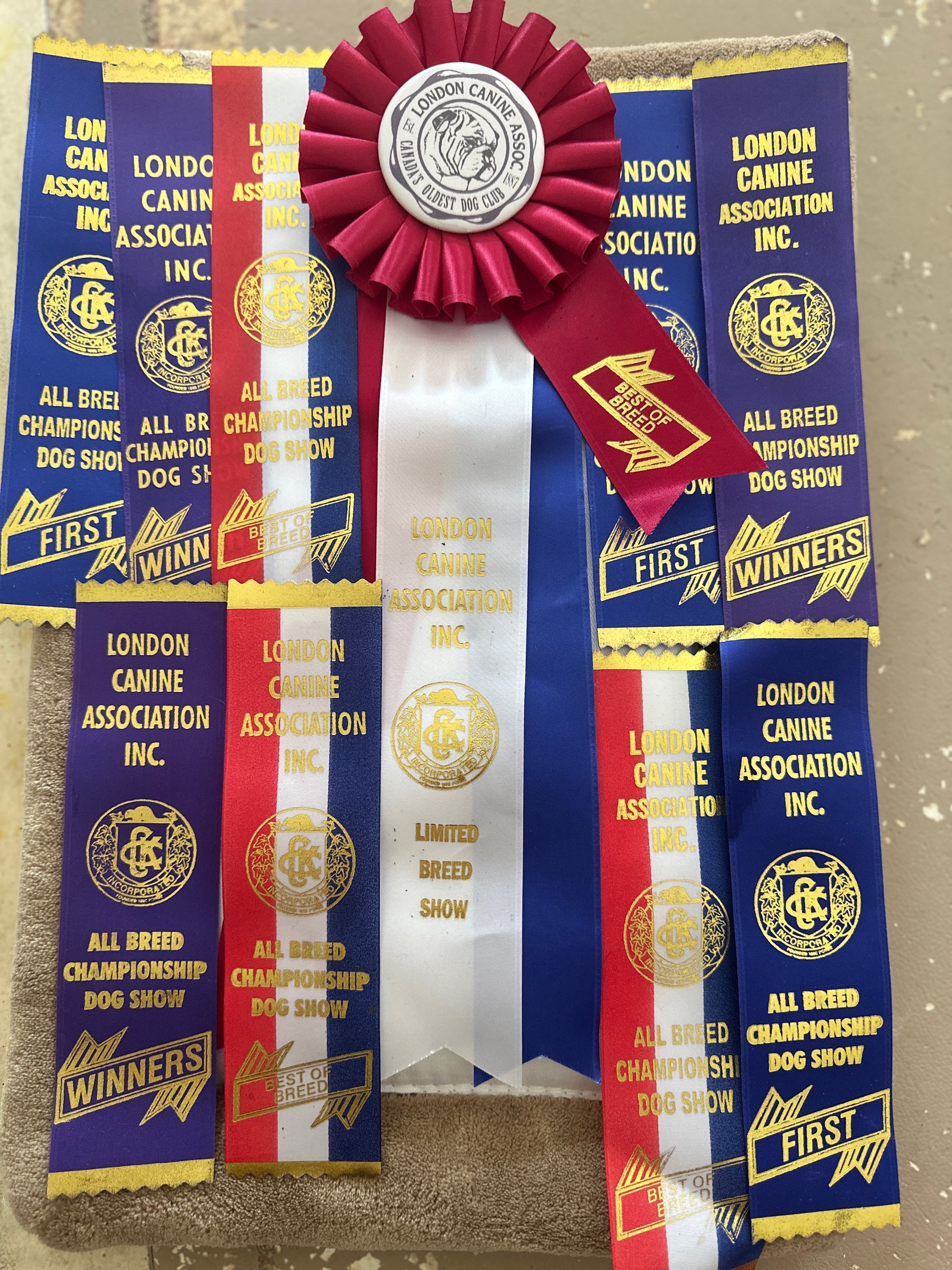

There is something wonderfully entertaining about living with Samoyeds and Shiba Inus.
Take a perfectly ordinary situation. Someone arrives for a visit.
The Samoyed may already be halfway to the door, tail wagging, smiling and preparing to welcome a person it has never met but apparently missed terribly.
The Shiba?
The Shiba is conducting a background check.
Who is this person? Why are they here? How long are they staying? And why, exactly, are they already reaching toward my head?
Two dogs. One visitor. Two very different opinions about how introductions should work.
Of course, not every Samoyed is a social butterfly, and not every Shiba is a suspicious little security officer. I've lived with enough of both breeds to know that dogs have a wonderful habit of ignoring their own breed descriptions.
But their different approaches to people, friendships and affection are fascinating to watch.
And they raise an interesting question.
Does a dog have to love everybody to be a wonderful companion?
I certainly don't think so.
The Welcome Committee Has Arrived
Samoyeds are often enthusiastic participants in family life. They like knowing what's happening, who's involved and whether there's room for one more.
Visitors arriving? Wonderful!
A family gathering? Even better!
Someone sitting quietly on the sofa? Clearly a person in desperate need of a fluffy companion.
A Shiba may have a slightly different approach.
It might prefer to watch from a comfortable distance, assess the visitor and decide whether an introduction is necessary.
And sometimes the decision is no.
That's perfectly reasonable.
We tend to admire dogs that eagerly greet everyone, but we sometimes misunderstand those that prefer to observe.
A dog that doesn't rush forward isn't automatically shy, fearful or poorly socialized.
Some dogs simply prefer taking their time.
But there's an important distinction. A dog calmly observing from a distance is not the same as one that is frightened, tense or desperately trying to escape.
Likewise, a dog rushing forward isn't necessarily demonstrating wonderful confidence. It might simply be so excited that it has temporarily misplaced its manners.
Which brings me to our enthusiastic Samoyeds.
Loving everybody is lovely.
Launching yourself at everybody like an oversized snowball with legs?
Not quite as lovely.
Imagine visiting someone's home and having a complete stranger rush over, throw their arms around you and announce that you're now best friends.
Excellent intentions, perhaps.
A little overwhelming? Absolutely.
Dogs can feel the same way.
An outgoing Samoyed may be delighted to meet another dog, but that doesn't mean the other dog wants an immediate, full-contact friendship.
And a Shiba that politely walks past without stopping isn't necessarily being unfriendly.
It may simply have other plans.
Being friendly and having good manners are two different things.
Sometimes the most socially skilled dog in the room is the one that knows when to leave someone alone.
A lesson a few humans could benefit from as well.
The Shiba Doesn't Hate Your Friends
Let's clear up another misunderstanding.
Shibas are often described as independent or reserved, and somewhere along the way, that gets translated into the idea that they don't particularly like people.
That's not quite how it works.
A Shiba can be deeply attached to its family without wanting to become everybody's new best friend.
Some follow their favourite person around the house. Others bring toys, settle nearby or quietly keep track of where everyone is.
They simply may not feel the need to announce their affection to the entire neighbourhood.
A Samoyed might greet you after five minutes apart as though you've just returned from an expedition across Antarctica.
A Shiba may lift its head, acknowledge your return and go back to whatever important business it was conducting.
Five minutes later, you notice that same Shiba has followed you into the kitchen.
Pure coincidence, naturally.
And this is something I think we humans sometimes forget.
Affection doesn't always mean cuddling.
Sometimes it's a dog choosing to stay beside you. Sometimes it's bringing you a ball. Sometimes it's simply enjoying your company without wanting to be touched.
One dog may happily roll onto its back for belly rubs.
Another may prefer a game of fetch.
Neither loves its person more or less because of it.
And just as importantly, dogs should be allowed to say when they've had enough affection.
If a dog moves away, let it.
If it chooses to rest somewhere quiet, respect that.
A relationship built on trust is much more valuable than one where the dog has learned it must tolerate whatever we decide to do.
The Family Dog Interview: Who's Actually Qualified?
People often ask which breed makes the better family dog.
And while I'd love to offer a simple answer, life with Samoyeds and Shiba Inus makes that rather difficult.
Picture a family with three energetic children, plenty of visitors and a house that hasn't experienced five uninterrupted minutes of peace since 2018.
The Samoyed hears this description and immediately submits an application.
Children? Excellent!
Activities? Wonderful!
Visitors? Even better!
The Shiba would like a little more information.
Do the children understand personal space? Is participation in family gatherings mandatory? And is there somewhere quiet to relax when the household turns into a small circus?
Fair questions, actually.
But here's the important part.
Just because a dog loves people doesn't automatically mean it's prepared for life with children.
Our enthusiastic Samoyed may adore the entire family but still need to learn that toddlers aren't bowling pins.
A more reserved Shiba may enjoy family life when the children understand its boundaries and the household provides an appropriate environment.
On the other hand, a dog that is genuinely fearful or easily overwhelmed by noise and movement may not be a good match for a particularly busy home.
That's why I look beyond whether a dog wants to greet everyone.
How does it handle something unexpected?
Can it recover after being startled?
Can it relax around normal household activity?
Does it seem comfortable, or is it constantly on edge?
Children drop things. Doors slam. Someone discovers a spider and suddenly the entire house knows about it.
A resilient dog may be startled, then recover and carry on with its day.
That ability matters enormously in family life.
But even the most wonderful temperament doesn't mean children and dogs can be left to manage their own relationship.
Adults need to supervise, especially with young children.
We teach puppies not to jump, nip or snatch things. We also need to teach children not to chase dogs, disturb them while sleeping, take their toys or insist on hugs.
Sometimes the children need just as much training as the puppy.
Possibly more.
And unlike puppies, they rarely accept payment in liver treats.
Not Every Dog Needs a Social Calendar
Somewhere along the way, we've developed the idea that every dog should enjoy playing with every other dog.
Dog parks, daycare, puppy playdates, neighbourhood introductions.
Apparently, our dogs are expected to maintain more active social lives than most adults.
But not every dog wants that.
Some love lively group play. Others prefer one familiar companion. Some enjoy a quick greeting and then want to continue exploring.
And some would rather sniff trees in peace without attending another canine networking event.
Personally, I understand that last one.
I'm not interested in becoming best friends with every stranger at the grocery store either.
I'm only there for milk.
A happy, socially comfortable dog doesn't need a huge collection of canine friends.
It needs to be able to handle everyday encounters appropriately and enjoy the relationships it does have.
And when dogs do play together, I find their interactions particularly interesting to watch.
There's so much communication happening.
One dog approaches, the other responds, and suddenly they're chasing, bouncing, wrestling and performing what looks like an Olympic sporting event.
But the important question isn't how exciting the game looks.
It's whether both dogs are enjoying it.
Are they taking breaks? Can one dog move away without being constantly pursued? Does the dog being chased voluntarily come back for another round?
Or is one dog becoming tense, overwhelmed or desperate to escape?
Good play is a conversation, not a wrestling match where one participant has forgotten to ask whether the other wants to compete.
Picture a Samoyed enthusiastically inviting a Shiba to play.
The Samoyed bounces.
The Shiba watches.
The Samoyed performs an elaborate play bow, followed by a dramatic sideways hop.
The Shiba continues watching.
At this point, the Samoyed has practically performed an entire Broadway production.
Eventually, the Shiba decides the game might be worth joining.
Or perhaps it doesn't.
And that's okay.
Sometimes a perfectly successful social interaction ends with two dogs deciding they have absolutely no interest in doing anything together.
Living Together Doesn't Mean Sharing Everything
People have a rather romantic picture of multi-dog households.
Everyone playing happily together, sharing toys, sleeping in one enormous fluffy pile and generally behaving like a perfectly coordinated family photograph.
And sometimes it really does look like that.
Other times?
Welcome to the canine version of a family gathering where everyone has a favourite chair, someone stole somebody else's snack and at least one family member would prefer a little peace and quiet.
Living with several dogs has taught me that getting along doesn't mean wanting to do absolutely everything together.
One dog might love a lively game of chase.
Another would rather watch from a comfortable distance.
A Samoyed may arrive with a toy and an enthusiastic invitation to play.
The Shiba might inspect the toy, consider the proposal and decide today's schedule is already full.
Nothing wrong with that.
But things get a little more interesting when both dogs want the same toy.
Suddenly, we're no longer discussing friendship.
We're discussing property rights.
And Shibas can have some very strong opinions about property rights.
This is why I believe managing a multi-dog household is about much more than simply putting dogs together and expecting everyone to become friends.
Some dogs happily share resting areas. Others appreciate having their own comfortable space.
Some enjoy playing together but prefer to eat without an audience.
Others get along beautifully until excitement builds a little too high.
That's when a break can prevent a good afternoon from turning into an argument.
And when it comes to meals, I'd much rather let every dog enjoy dinner peacefully than organize a competitive eating championship.
Individual spaces, separate feeding arrangements when appropriate, supervised activities and predictable routines aren't signs that dogs can't get along.
They're ways of helping them get along.
I also don't believe in letting dogs fight to sort out serious disagreements. It's our responsibility to notice tension, manage situations and prevent unnecessary conflict.
After all, we're the ones who brought everyone together.
We might as well be reasonable hosts.
And let's not forget one-on-one time.
Having canine companions doesn't replace the relationship a dog has with its humans.
One may enjoy a quiet grooming session. Another loves fetch. A third wants to accompany you on a walk.
The fourth may be a Shiba who has decided that watching everyone else exercise is already an exhausting afternoon.
Different personalities, different interests.
The goal isn't to give every dog an identical day.
It's to make sure each has opportunities for the activities, companionship and rest it enjoys.
Sometimes the secret to a peaceful multi-dog household isn't getting everyone to do more together.
It's knowing when to give them a little breathing room.
Socialization Isn't a Popularity Contest Either
This brings me to something I wish every new puppy family understood.
Socialization isn't about introducing your puppy to as many people and dogs as physically possible.
You don't receive a trophy because your puppy met seventeen strangers, six Labradors, a delivery driver and somebody's grandmother before lunchtime.
The goal is to help puppies become comfortable with the world around them.
That means meeting different kinds of people, experiencing new environments, hearing everyday sounds and learning how to cope with unfamiliar situations.
But those experiences should suit the individual puppy.
An outgoing Samoyed puppy might need practice learning that every passing human isn't a potential new best friend.
A more observant Shiba puppy might benefit from watching people at a comfortable distance before choosing to approach.
Neither lesson is less valuable.
And a genuinely frightened puppy needs support and a gentler approach, not pressure to be brave.
Sometimes the best socialization experience is simply sitting somewhere quiet and watching the world go by.
No forced greetings. No overwhelming introductions.
Just a puppy learning that unfamiliar things can happen without requiring an immediate reaction.
That might not make for an exciting social media video.
But it can make for a much more comfortable dog.
The Puppy You Want and the Family You Actually Are
As a breeder, one of my favourite parts of getting to know prospective families is hearing what they imagine life with their new dog will look like.
Some want an active companion for adventures.
Others imagine relaxed evenings on the sofa.
Some have young children and wonderfully chaotic households. Others enjoy quieter routines.
And then there are the families who want an affectionate, playful, independent, easygoing, energetic-but-calm dog who loves everybody, never barks, doesn't shed and is perfectly happy being left alone.
Preferably by Friday.
I usually have a few questions.
Because choosing a family dog isn't simply about falling in love with a breed or picking the cutest puppy photograph.
It's about understanding what the family can realistically offer and what kind of dog is likely to thrive there.
A busy family doesn't automatically need the most outgoing puppy.
A quiet household doesn't automatically need an independent breed.
And an active family isn't necessarily ready for an energetic dog if nobody has time for training.
When I observe puppies developing, I'm interested in their social preferences, confidence, recovery from surprises, curiosity and how they engage with people and their environment.
Those observations help us make thoughtful matches.
But an eight-week-old puppy isn't a finished adult dog, and no single temperament test can promise exactly who that puppy will become.
We can make educated decisions, provide a strong foundation and help families understand what to expect.
What we can't do is guarantee a personality from a photograph.
Even if that photograph is ridiculously cute.
Final Thoughts: Not Everybody Wants to Join the Party
Living with Samoyeds and Shiba Inus has taught me that there is more than one way to be a wonderful companion.
Some dogs greet the world with enthusiasm.
Others prefer to observe before joining in.
Some love endless cuddles.
Others would rather bring you a toy or settle quietly beside you.
Some are happiest surrounded by activity. Others appreciate a little personal space.
And sometimes the Samoyed is the independent one while the Shiba follows you around like a little shadow, just to remind us that neither breed has actually read its own description.
What matters isn't how many friends a dog makes or how enthusiastically it greets strangers.
It's whether that dog feels comfortable, secure and understood, and has the opportunity to build healthy relationships that suit its temperament.
Because a happy dog doesn't need to love everybody. It needs people who understand how it loves.
And if you happen to live with both a Samoyed and a Shiba Inu?
Your Samoyed will probably organize the party.
Your Shiba will decide whether it was worth attending.
And you'll be the one cleaning up afterward.
Welcome to dog ownership.


Comments