WHAT DOES OWNING ASHOW-POTENTIAL PUPPY ENTAIL? A Guide for Prospective Samoyed and Shiba Inu Show Puppy Owners
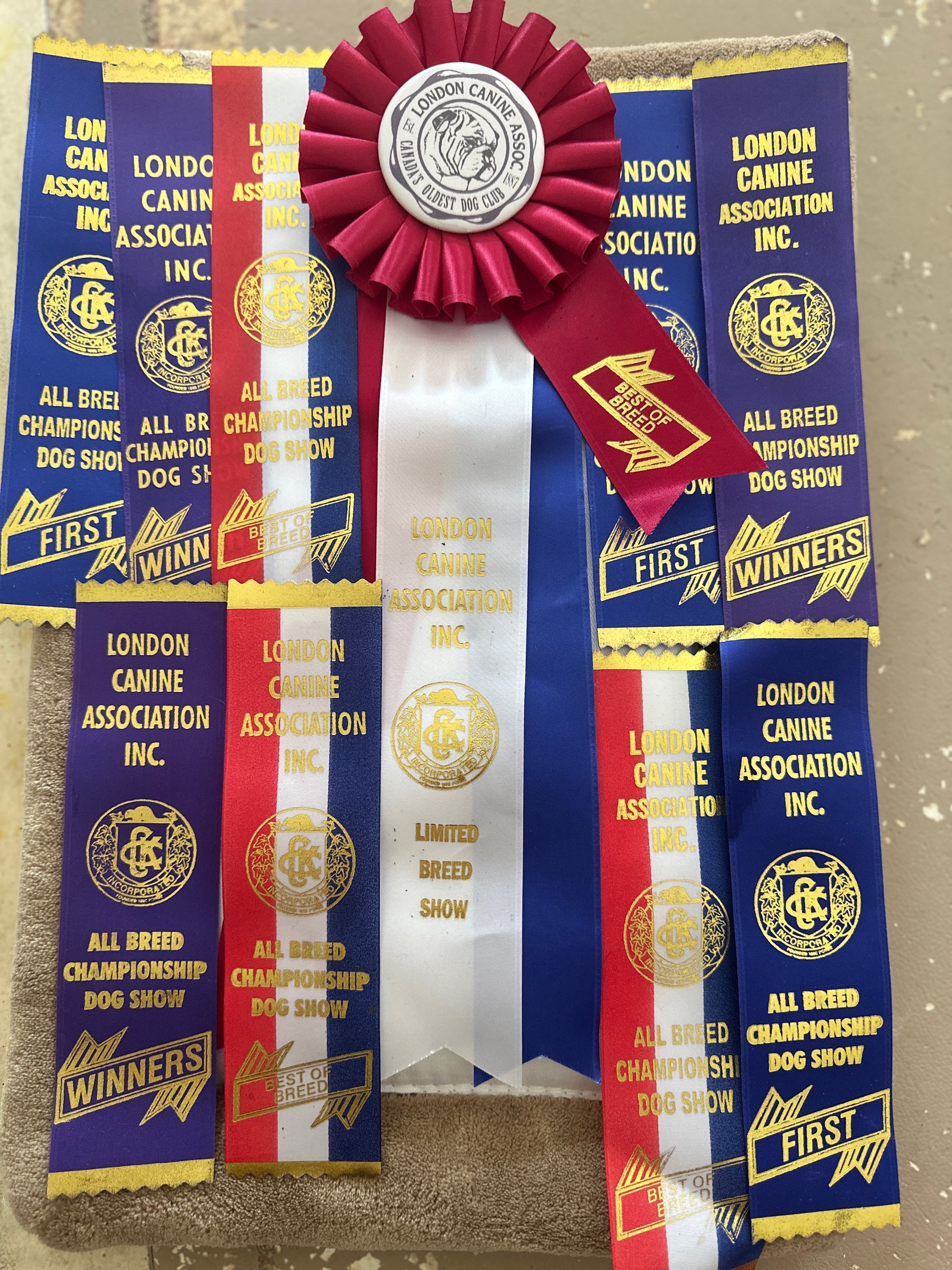
The honest, occasionally fluffy, sometimes muddy and always rewarding road from puppy buyer to owner-handler

So, you are thinking about a show puppy. Perhaps you have watched a beautiful dog glide around the ring and thought, “I could do that.” You probably can. What you may not yet know is how much happens before that graceful lap around the ring: brushing, bathing, training, travel, practice, and the occasional conversation with a puppy who has decided that today is not a day for cooperation.
Showing with the Canadian Kennel Club (CKC) can become a wonderfully rewarding hobby and a great way to build a relationship with your dog. It is also a commitment. There will be grooming days, training classes, early mornings, show entries, travel plans and expenses. There may even be dog hair in places you had previously considered dog-free. Consider this your friendly introduction to the whole adventure.
Whether your heart is set on a Samoyed or a Shiba Inu, the details matter. They are very different breeds, and the experience of preparing each for the show ring is different too.
A show puppy is not a shortcut to the top of the reservation list, nor is it simply a puppy with a bigger price tag and impressive parents. It is a puppy placed with the hope that its owner will become an active partner in presenting, preserving and, where appropriate, improving the breed.
And here is the first lesson every new show home eventually learns: potential is just that—potential. Puppies grow, change and occasionally surprise everyone. The puppy who looks like a future superstar at eight weeks may take a different path, while another may blossom later. Our job is to give them the best opportunity, not to promise a crystal-ball result.
This guide is written from the breeder's perspective, with the new owner-handler in mind. It is meant to explain the commitment without making the whole thing sound like homework. There is plenty to learn, but you are allowed to enjoy yourself along the way.
1. Understanding Conformation Showing
CKC Conformation shows evaluate how closely a dog matches its written breed standard. Judges assess structure, movement, coat, condition, temperament and overall presentation. In plain language: they are looking at the whole dog, not just the smile, the fluff or the way the dog knows exactly when the camera is pointed at it.
Conformation is not simply a beauty contest. It is one of the tools responsible breeders use to evaluate their dogs and assess how well their breeding programs preserve the qualities that make each breed distinctive. A pretty picture is lovely; a sound, healthy dog that represents its breed is the goal.
A Samoyed and a Shiba Inu were developed for different purposes and have very different physical characteristics. Learning what makes your own breed correct is part of becoming a thoughtful exhibitor—and it will help you understand why the judge may be looking at something you had not even noticed.
As a prospective show puppy owner, you should become familiar with:
· The CKC Conformation show process.
· The official CKC breed standard for your chosen breed.
· The purpose and historical development of the breed.
· What judges look for when evaluating your breed.
· How dogs are examined and presented in the ring.
· How Championship points are earned.
· The responsibilities of an owner-handler.
· The option of hiring a professional handler.
Before committing, go to a few CKC shows as a spectator. Watch your breed, talk to exhibitors and pay attention to what happens outside the ring. Notice the grooming tables, the exercise breaks, the crate setups and the calm teamwork between dog and handler. The ring time is only the visible part of the weekend. If possible, ask an experienced exhibitor if you can observe their preparation. Most people remember being new and are happy to help—especially if you do not ask them a complicated question while they are trying to get a dog ready for the ring.
2. Understanding Your Breed and Its Standard
Owning a show dog means learning more than its colour, coat and photogenic side. You should understand why the breed was developed, what makes it distinctive and what the breed standard considers essential. Think of the standard as your map. You do not need to memorize it on day one, but you should know where you are going.
Samoyeds
The Samoyed is a working breed developed by the Samoyedic peoples of Siberia. Its original functions included herding, pulling sleds, hunting and companionship. Its structure, movement, temperament and weather-resistant double coat reflect that working heritage.
The correct Samoyed should be strong, balanced, athletic and capable of performing its original functions. The beautiful white coat is only one part of the picture.
Shiba Inu
The Shiba Inu is an ancient Japanese breed developed for hunting in mountainous terrain. It is the smallest of Japan's native spitz breeds. The Shiba is expected to be agile, compact, balanced and alert, with a distinctive expression, correct coat and characteristic temperament.
Its physical structure, movement, temperament and overall breed type are equally important. The Shiba is not simply a small, attractive companion dog. Its primitive character, independence and intelligence are important parts of what makes the breed what it is.
Read the official CKC breed standard rather than relying only on photographs or social media. Photos can be flattering, angles can be creative, and the internet has never been short of confident opinions. The written standard is the reference point.
3. Remaining Intact and Potential Breeding Considerations
One of the first practical questions to settle is whether you are comfortable keeping your puppy intact. It is important to understand the difference between regular Conformation competition and the CKC Altered classes.
Regular Conformation competition is intended for dogs that have not been surgically altered. Spayed and neutered dogs may participate in separate Altered classes when offered, subject to CKC regulations.
If you are purchasing a puppy specifically for a regular show career, you must be comfortable keeping that dog intact.
There may also be future breeding considerations. A breeder may place a promising puppy with a family while retaining certain breeding rights or the option to evaluate the dog for a future contribution to the breeding program. This is a serious responsibility, not a vague “maybe one day” arrangement, so make sure the details are understood before you fall in love with the puppy—and that part tends to happen quickly.
A puppy's adult structure, movement, coat, temperament and overall quality cannot be fully predicted at eight weeks. Development has its own timetable, and it does not always consult the breeder's plans. A responsible breeder will reassess the dog as it matures and be honest about whether it remains suitable for showing or breeding.
Prospective owners should be prepared to discuss:
· Whether the puppy must remain intact.
· Whether the breeder retains breeding rights.
· Whether the dog may be considered for future breeding.
· Whether the dog may need to travel for breeding purposes.
· Who is responsible for health testing.
· Who covers breeding-related veterinary expenses.
· What happens if the dog does not meet breeding requirements.
Not every show puppy will become a breeding prospect. That is perfectly normal. The possibility must simply be discussed in advance, with any breeding arrangements clearly written into the purchase agreement. No surprises, no assumptions and no relying on “I thought you meant…” later.
4. Co-Ownership and Breeder Agreements
Some breeders use co-ownership when placing show-potential puppies, particularly with new exhibitors. It can sound intimidating at first, but a well-written agreement should make the arrangement clear. Think of it as a partnership with responsibilities on both sides—not a mysterious document that only comes out when someone wants to book a stud dog.
In some situations, the breeder remains a secondary owner while the puppy lives with and is primarily cared for by the new family. This arrangement allows the breeder to remain involved in the dog's development, show career and potential contribution to the breeding program.
Other breeders may have specific contractual expectations, including:
· Completing the dog's CKC Championship.
· Attending a minimum number of shows.
· Keeping the dog intact until agreed conditions are met.
· Making the dog available for future breeding opportunities.
· Completing required health testing.
· Allowing the breeder to evaluate the dog periodically.
· Providing photographs and developmental updates.
· Maintaining communication about training, grooming and show progress.
There is no universal co-ownership arrangement. Some are straightforward; others include more detailed expectations because of the puppy's potential and the breeder's program.
Read the agreement before you commit. Ask questions, even if you think they sound obvious. A good breeder would rather explain something twice than discover six months later that everyone had a different understanding. Ownership, expenses, breeding rights, show expectations and each party's responsibilities should be clearly documented.
Never assume that two breeders offering show puppies have identical requirements.
5. Grooming: Two Breeds, Two Very Different Commitments
Here is where the Samoyed and Shiba Inu owner-handler may feel they have joined two entirely different hobbies. Both have double coats, but the amount of grooming, the tools and the preparation are not the same. The good news: you can learn. The less surprising news: the vacuum cleaner may become a permanent member of the family.
Samoyed
The Samoyed's magnificent double coat has a dense, soft undercoat and a longer, harsher outer coat that protects the dog from the elements. It is beautiful, functional and not remotely low-maintenance. If you imagined a quick brush before breakfast, the Samoyed may have other plans for your calendar.
Owners must be prepared for:
· Frequent thorough brushing and combing.
· Regular line brushing to reach the undercoat.
· Preventing mats and tangles.
· Regular bathing using appropriate coat products.
· Thorough drying, including the undercoat.
· Nail trimming and foot maintenance.
· Keeping the coat clean and in good condition.
· Learning correct breed-specific presentation.
· Managing seasonal coat changes and heavy shedding.
A Samoyed coat needs more than a casual once-over. Line brushing helps you reach the undercoat, and proper bathing and thorough drying are essential. A damp undercoat can cause problems, while missed tangles can quietly turn into mats close to the skin. The first time you finish drying a Samoyed and discover that one leg is still damp, you will understand why experienced exhibitors plan their grooming time carefully.
Show grooming is about presenting the dog's natural outline and correct coat texture—not sculpting it into something it is not. Clipping or shaving a Samoyed for convenience is not a substitute for learning proper coat care. Ask your breeder or an experienced Samoyed groomer to show you the techniques before you try to reinvent the wheel with a pair of scissors.
Shiba Inu
The Shiba Inu has a short, dense double coat with a stiff outer coat and soft undercoat. Its grooming routine is generally less elaborate than a Samoyed's, but do not mistake “less elaborate” for “no hair.” A Shiba can produce a truly impressive amount of coat when seasonal shedding arrives.
Owners must be prepared for:
· Regular brushing.
· Managing seasonal shedding and coat blow.
· Bathing when necessary.
· Nail trimming and foot maintenance.
· Ear care.
· Maintaining correct coat texture and condition.
· Learning appropriate breed-specific presentation.
Shibas can shed an astonishing amount during coat blow. At some point, you may brush out what appears to be a second Shiba Inu and wonder whether it should have its own CKC registration. Smaller dog does not mean smaller laundry or less hair on the sofa.
The Shiba's coat should retain its natural texture and appearance. Excessive trimming, sculpting or unsuitable products can compromise correct presentation. The aim is a clean, healthy, correctly maintained Shiba—not a dog that looks as though it has had a salon makeover.
Learning to Groom Your Own Dog
Many owner-handlers learn to groom their own dogs, and it is a very useful skill. Start with the right equipment, learn the techniques for your breed and practise regularly. You will not become an expert after one video or one grooming session. That is normal. The aim is steady progress, not perfection by next Saturday.
Professional show grooming is also an option, especially while you are learning or if you do not have the space, equipment or confidence to prepare the dog yourself. It can, however, become a significant ongoing expense. A practical approach is to learn basic maintenance even if you plan to use a professional for show preparation.
Introduce grooming when your puppy is young and make it a normal part of life. Practise standing on a grooming table, brushing, foot handling, nail trims, bathing and getting used to the dryer. Keep sessions positive and manageable. Your first goal is not a perfectly finished coat; it is a puppy who thinks grooming is a routine activity rather than a suspicious event requiring a formal protest.
Do not leave grooming until the week before a show. A Samoyed coat in particular is an ongoing project. Build a routine, ask for help and remember that a tidy dog is usually the result of many small sessions—not one heroic evening fuelled by coffee.
6. Training, Temperament and Socialization
A show dog needs more than good structure. Confidence, temperament and the ability to cope with handling and busy environments matter too. The dog should enjoy working with you, or at least be willing to negotiate the arrangement without calling a union meeting.
Both Samoyeds and Shiba Inus are intelligent breeds, but they have different temperaments and training considerations.
Samoyeds
Samoyeds are generally sociable, affectionate and people-oriented. They are intelligent and enjoy interaction, but their enthusiasm can sometimes arrive before their manners. Your young Samoyed may believe every person at the show is there specifically to admire them. It is your job to explain that judges appreciate enthusiasm, but they also need the dog to stand still occasionally.
Training should focus on:
· Basic obedience and household manners.
· Walking politely on a leash.
· Learning to stand for examination.
· Accepting handling by unfamiliar people.
· Maintaining attention around other dogs.
· Walking correctly on a show lead.
· Settling calmly in a crate or exercise pen.
· Developing appropriate independence.
· Learning to remain composed in unfamiliar environments.
Shiba Inu
Shibas are intelligent, independent and often very clear about their personal preferences. They are not impossible to train, but they do require consistency, patience and an understanding of primitive breed behaviour. A Shiba may hear your request, consider the available options and decide that your suggestion needs further review. Keep your sense of humour—and your rewards handy.
Training should focus on:
· Positive reinforcement and consistent boundaries.
· Basic obedience and household manners.
· Reliable leash behaviour.
· Accepting examination and handling.
· Becoming comfortable around unfamiliar people.
· Maintaining composure around other dogs.
· Learning to stand and move correctly.
· Developing confidence in unfamiliar environments.
· Settling calmly in a crate or exercise pen.
· Learning appropriate independence.
Both breeds benefit from early, positive socialization. Your puppy should become comfortable with people touching its feet, examining its body, checking its bite and handling its tail and coat. Practise in short sessions. The goal is a confident dog who understands that being examined is part of the job, not an unexpected ambush.
You are not trying to create a robot that stands perfectly still. You are building a dog who trusts you, feels secure and can enjoy new experiences. That relationship will matter far more than any single training session.
7. Exposure to Dog Shows and the Show Environment
One of the best things you can do is let your puppy experience the show world gradually, before you expect it to perform there. Your first show visit can be an outing to watch, learn and soak it all in—not a test of whether your puppy is ready to win a ribbon.
A dog show can be a lot for a young puppy: crowds, unfamiliar dogs, loudspeakers, dryers, busy aisles, strangers and long days. The first time you walk into a show building, you may feel a little overwhelmed yourself. That is fine. Take it slowly, find a quiet spot and let your puppy observe without expecting too much.
Early, positive exposure helps build confidence. We encourage show puppy owners to begin attending dog shows as spectators as early as practical.
Other valuable experiences include:
· Puppy socialization classes.
· Conformation handling classes.
· Supervised grooming appointments.
· Practising on grooming tables.
· Meeting unfamiliar people and dogs.
· Visiting new environments.
· Spending time in crates and exercise pens.
· Attending match shows and informal dog events.
· Learning to settle calmly in busy environments.
Introduce these experiences gradually, taking your puppy's age, vaccination status and comfort into account. Do not try to tick every box in one weekend. Confidence grows through good experiences repeated over time. A puppy who has had enough should be allowed to rest; there is no prize for the most exhausted dog at the show.
8. Learning to Handle and Show Your Own Dog
You do not need to arrive as an experienced handler. Many CKC exhibitors started exactly where you are: with a puppy, a show lead and a vague suspicion that everyone else knows what they are doing. Owner-handling can become one of the most rewarding parts of the sport, but it takes practice—and a willingness to laugh at yourself while you learn.
Handling classes are highly recommended. They teach you and your puppy how to work together, and they give you a safe place to make beginner mistakes before the judge is watching. You will learn that holding a lead, keeping your dog in position and remembering where to stand can all become surprisingly complicated at the same time.
Some of the basics include:
· Proper use of a show lead.
· Stacking your dog for examination.
· Gaiting your dog correctly around the ring.
· Presenting your dog's bite.
· Positioning your dog for the judge.
· Understanding ring procedures and etiquette.
· Maintaining your dog's attention around other competitors.
You can also hire a professional handler. Some owners handle their own dogs, some use professionals, and others combine both approaches. Your breeder may be able to help with handling, grooming and show preparation. There is no shame in asking for help. In fact, learning from people who have already made the mistakes can save you time, money and at least one unnecessary grooming-table crisis.
The important thing is that your puppy is prepared, comfortable and presented fairly. The goal is teamwork—not pretending you knew everything before you walked through the door.
9. Understanding CKC Show Classes and Championships
Regular CKC Conformation competition begins at six months of age. Some shows also offer Baby Puppy classes for younger puppies. These are non-regular classes and do not count toward a regular Conformation Championship. They are a lovely way to introduce a puppy to the ring, provided everyone remembers that the puppy is still a baby.
The regular classes generally include:
· Junior Puppy: six to under nine months.
· Senior Puppy: nine to under twelve months.
· 12–18 Month.
· Canadian Bred.
· Bred by Exhibitor.
· Open.
The available classes and scheduling may vary between shows and specialties.
To earn a CKC Conformation Championship, a dog must:
· Accumulate at least 10 Championship points.
· Earn those points under at least three different judges.
· Earn at least one two-point win at the breed or group level.
· Meet the applicable CKC registration requirements.
The number of points awarded depends on the number of dogs competing and the applicable point schedule. After completing its Championship, a dog may continue competing in Best of Breed competition and pursue additional titles, including Grand Champion titles.
Not every puppy will mature into a competitive show dog. Breeders select puppies based on potential, but structure, movement, coat and overall quality can change as a dog develops. This is another reason to stay in touch with your breeder. The honest assessment may be that your dog is better suited to being a much-loved companion—and that is not a failure. The dog has not read the show catalogue and does not need a title to be an excellent dog.
10. Time Commitment and Showing Consistently
Showing takes more time than the hours spent in the ring. There is grooming beforehand, training between shows, travel, conditioning, packing and planning. New exhibitors often discover that preparing for a show can feel like organizing a small expedition, except the most important passenger may insist on bringing half the coat in the back of the vehicle.
Some owners attend only a handful of shows each year, while others participate regularly throughout the show season. Individual breeders may have different expectations for their show homes.
Some may require a dog to complete its CKC Championship, while others may ask for a minimum number of shows or simply expect a genuine effort toward competing.
If you purchase a puppy specifically for Conformation, be prepared to make showing a regular part of your routine. If your dog proves particularly competitive and represents the breed well, your breeder may encourage you to continue beyond the first Championship. Discuss expectations early so that everyone is working toward the same goal.
Showing should be something you genuinely enjoy, not an obligation that slowly turns every weekend into a negotiation. Be honest about the time you can give, and make sure the breeder's expectations fit your life.
11. Financial Commitment
Dog showing can become an expensive hobby. Entry fees are only the beginning, and the costs can add up faster than a Samoyed can distribute undercoat through a house. Plan realistically before committing.
Potential expenses include:
· Puppy purchase price.
· CKC registration and transfer fees, where applicable.
· Show entry fees.
· Professional handling fees.
· Professional show grooming.
· Grooming equipment and supplies.
· Bathing and coat-maintenance products.
· Show leads and presentation equipment.
· Handling classes and training.
· Travel expenses, including fuel and airfare.
· Hotel accommodations.
· Parking and show-site expenses.
· Meals and other travel costs.
· Specialty and National show expenses.
· Health testing and veterinary clearances.
· Additional veterinary appointments and screening procedures.
Costs vary considerably depending on how frequently you show, whether you handle your own dog, whether you travel and how much grooming you perform yourself.
A few local shows with you doing your own grooming will cost less than a full season of travel and professional handling. Either way, do not assume the puppy purchase is the biggest expense. A realistic budget makes the experience much more enjoyable—and reduces the chance of explaining to your family why the dog has a better travel kit than everyone else.
12. Health, Conditioning and Responsible Breeding
Before anything else, a show dog is a family companion. Health, comfort and quality of life always come before competition. No ribbon is worth asking a dog to work when it is unwell or uncomfortable.
Keep your dog fit through appropriate exercise, good nutrition, routine veterinary care and sensible weight management. Samoyeds and Shiba Inus are active breeds, and both need physical and mental engagement beyond the show weekend.
Health testing is particularly important when a dog is being considered for a breeding program. The specific health clearances differ between breeds and should be based on current breed-club recommendations, the dog's pedigree and veterinary guidance.
Depending on the breed and individual breeding plan, testing may include:
· Hip evaluations.
· Patella evaluations.
· Eye examinations.
· Cardiac assessments.
· Thyroid testing.
· Breed-relevant DNA testing.
· Other recommended veterinary assessments.
The breeder should explain which health tests are required, when they should be completed and who is responsible for the associated expenses.
Some evaluations must be completed at particular ages, may need to be repeated or may require appointments with specialists. Owners may need to coordinate veterinary visits, submit samples, maintain records and share results with the breeder.
Who pays for health testing varies by breeder and by the terms of the puppy agreement. In some arrangements, the breeder may cover the costs; in others, the new owner may be responsible for some or all testing. These expectations should be discussed and documented before purchase.
If a dog is being considered for breeding, required health testing must be completed. It is not a box-ticking exercise or an optional extra. It is part of the responsibility shared by breeders and owners who care about the long-term health of the breed.
Never push a dog to compete when it is unwell, uncomfortable or not physically ready. Sometimes the best handling decision is to leave the show lead in the bag, go home and give your dog a quiet day.
13. Staying Connected With Your Breeder
A good relationship with your breeder is especially important with a show-potential puppy. Your breeder has invested time, research and planning in the litter, and they want to see the puppy thrive—whether that means a Championship, a breeding future or simply a very happy life on your sofa.
Your breeder is also an important resource as your puppy develops. They may request:
· Periodic photographs as your puppy matures.
· Updates on temperament, structure and development.
· Information about training and grooming progress.
· Updates on show results and experiences.
· Opportunities to evaluate your dog in person.
· Communication about potential breeding opportunities, if applicable.
· Health testing results and veterinary reports.
Regular communication helps your breeder follow your puppy's development and offer guidance when you need it. It also connects you with other owners, exhibitors and breed enthusiasts. Send the photos, ask the questions and share the funny stories too. Your breeder does not only want to hear from you when there is a problem.
A show home is a partnership between the breeder and the family. The strongest partnerships are built on communication, trust, realistic expectations and a shared commitment to the dog.
IS A SHOW-POTENTIAL SAMOYED OR SHIBA INU RIGHT FOR YOU?
Owning and showing a Samoyed or Shiba Inu can be a wonderful experience. You will learn about your breed, develop new skills, travel, meet people who are just as enthusiastic about dogs as you are, and build a special relationship with your puppy. You may also learn to pack a grooming dryer, three leads and an emergency lint roller with the efficiency of a professional moving company.
However, it is important to be honest with yourself about the commitment involved. Before purchasing a show-potential puppy, ask yourself:
· Am I genuinely interested in participating in CKC Conformation shows?
· Am I comfortable keeping my dog intact for regular show competition?
· Am I willing to consider the breeder's potential breeding expectations?
· Am I prepared to maintain the dog's coat throughout its life?
· Am I willing to learn breed-specific grooming or pay for professional grooming?
· Can I commit to regular training and handling classes?
· Am I willing to expose my puppy to dog shows and unfamiliar environments?
· Can I realistically commit the time and finances required to attend shows?
· Am I comfortable with co-ownership or contractual requirements?
· Am I prepared to complete any required health testing?
· Am I willing to work with my breeder and provide developmental updates?
· Do I understand the particular temperament and needs of my chosen breed?
If you can genuinely answer yes to these questions, a show puppy may be a good fit. If you are unsure about some of them, talk to the breeder before making a decision. It is much easier to clarify expectations before the puppy arrives than after you have bought the first show lead.
FINAL THOUGHTS
A show puppy is not simply a puppy with a prettier coat, an impressive pedigree or a different purchase price. It is a commitment to learning, participating and helping your dog reach its potential.
There are no guarantees that a puppy selected for show potential will finish a Championship or become a breeding prospect. Even promising puppies can mature differently than expected. The best breeders know this, and the best owners understand that the dog is worth far more than the letters after its name.
What matters most is giving your dog a good home, protecting its health and well-being, and investing in the experiences, training and preparation that give it every reasonable opportunity to succeed.
A successful show home is not necessarily the one that wins every weekend. It is the one that works with the breeder, takes pride in presenting its dog, keeps learning and genuinely enjoys the journey. Sometimes success is a ribbon. Sometimes it is a puppy who finally stands still for five whole seconds. Both deserve a little celebration.
The ribbons and titles are wonderful, but they are not why we breed these dogs.
We breed because we love our breeds, believe in preserving their distinctive qualities and want the next generation to represent them as well as possible.
When we place a show-potential puppy, we entrust a little piece of that future to another family. That is a responsibility worth taking seriously—and one that should also be enjoyable.
Take your time. Visit shows, talk to exhibitors, attend handling classes, learn about the breed and ask your breeder questions. You do not need to know everything before you start. You do need curiosity, commitment, patience and a sense of humour.
The goal is not simply to find a home for a show puppy. It is to find a home that wants to learn, grow and be part of the journey.
OFFICIAL EDUCATIONAL RESOURCES
Samoyed Grooming – Paid Video Course: https://www.leadingedgedogshowacademy.com/courses/2938929/lectures/64961517
General Dog Grooming – Free Video (All Breeds): https://youtu.be/EriCn723bBQ
Canadian Kennel Club – Conformation Show Rules and Regulations: https://www.ckc.ca/en/Files/Forms/Shows-Trials/Event-Rules-Regulations/Conformation-Show-Rules-and-Regulations.aspx
CKC – Dog Shows 101: https://www.ckc.ca/en/The-Dish/May-2019/Dog-Shows-101
CKC – Samoyed Breed Standard: https://www.ckc.ca/CanadianKennelClub/media/Breed-Standards/Group%203/Samoyed.pdf
CKC – Shiba Inu Breed Information: https://www.ckc.ca/Choosing-a-Dog/PuppyList/Breed.aspx?breedCode=SII
Samoyed Association of Canada: http://samoyed.ca/
Shiba Inu Club of Canada: https://shibainucanada.com/
National Shiba Inu breed education resources: https://www.shibas.org/
Important note: Breed standards, health-testing recommendations and individual breeder requirements may change. Always consult the current CKC regulations, relevant breed-club recommendations and your breeder before making decisions.


Comments