BEING A BREEDER AND A MOTHER OF THREE: Raising Kids, Puppies, and a Little Bit of Chaos
Growing Up Around Dogs
People sometimes ask me what it is like to be a dog breeder and a mother of three. My usual answer? Imagine running a kindergarten, a maternity ward, a grooming salon, and a sports team simultaneously. Now add several dogs who have absolutely no respect for your schedule.
Our children have never really known life without dogs being part of practically everything we do. For them, dogs aren't just fluffy companions who steal socks and occupy the best spots on the couch. They are part of our routines, our work, our adventures, and our family traditions.
Growing up around a responsible breeding program teaches children that animals have individual personalities, needs, feelings, and boundaries. Loving a dog means more than cuddling it when it's cute. It also means caring for it, cleaning up after it, and accepting that sometimes the dog simply isn't interested in cooperating with your brilliant plans. Especially if that dog happens to be a Shiba Inu.
From the Whelping Box to Puppy Socialization
One of the most fascinating experiences for children is witnessing a litter being born and watching those tiny lives develop. They see newborn puppies, observe their mother caring for them, and watch sleepy little potatoes turn into curious, energetic troublemakers.
They learn why newborn puppies need warmth, careful monitoring, hygiene, and regular weight checks. They understand that a mother dog needs peace and that puppies must be handled gently and appropriately.
Bottle-feeding a tiny puppy: one of the more hands-on lessons in caring for a litter.
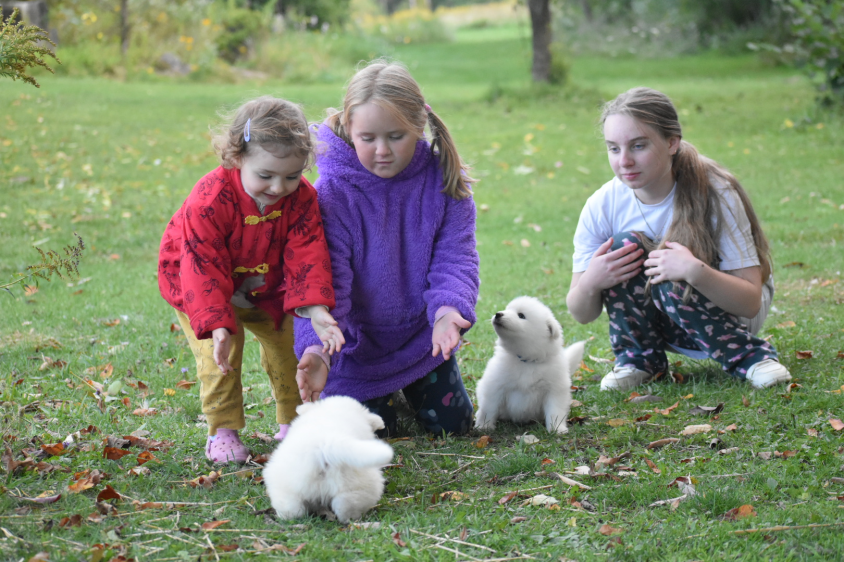
As puppies grow, the children enjoy participating in supervised socialization. They help introduce puppies to different sounds, surfaces, toys, household activities, and positive human interactions. Socialization isn't about overwhelming a puppy; it's about building confidence through safe, positive experiences at the puppy's own pace.


Puppy socialization includes gentle, supervised time with the whole family.
They also discover that every puppy is different. Some are fearless explorers. Others prefer to observe before joining the party. And some seem to have been born with a PhD in finding trouble. Sound familiar? Yes, I'm talking about children too.

Little Handlers, Big Achievements
One of my favourite parts of involving children in kennel life is watching them discover dog sports. We encourage them to participate in conformation and junior handling, where they learn ring etiquette, presentation, grooming, and how to work as a team with their dogs.
At first, there are crooked lines, forgotten instructions, tangled leads, and dogs who suddenly decide that the judge's shoes are much more interesting than their handler. But with practice, things start coming together.

Their confidence improves, their handling becomes smoother, and they begin to understand how to communicate with their dogs. Then come the results. There is something incredibly rewarding about watching a child proudly present a dog they have trained and worked with.

We also encourage everyday training, from basic obedience and stacking to grooming cooperation and learning new tricks. The children see firsthand that consistency produces results. A dog who struggled to stand still begins to hold a beautiful stack; a distracted puppy starts responding to cues; a nervous young handler becomes more confident.


And, naturally, everyone wants to celebrate. Although teaching a Shiba Inu to cooperate is sometimes less like dog training and more like negotiating an international peace agreement.
The Part Nobody Puts on Instagram
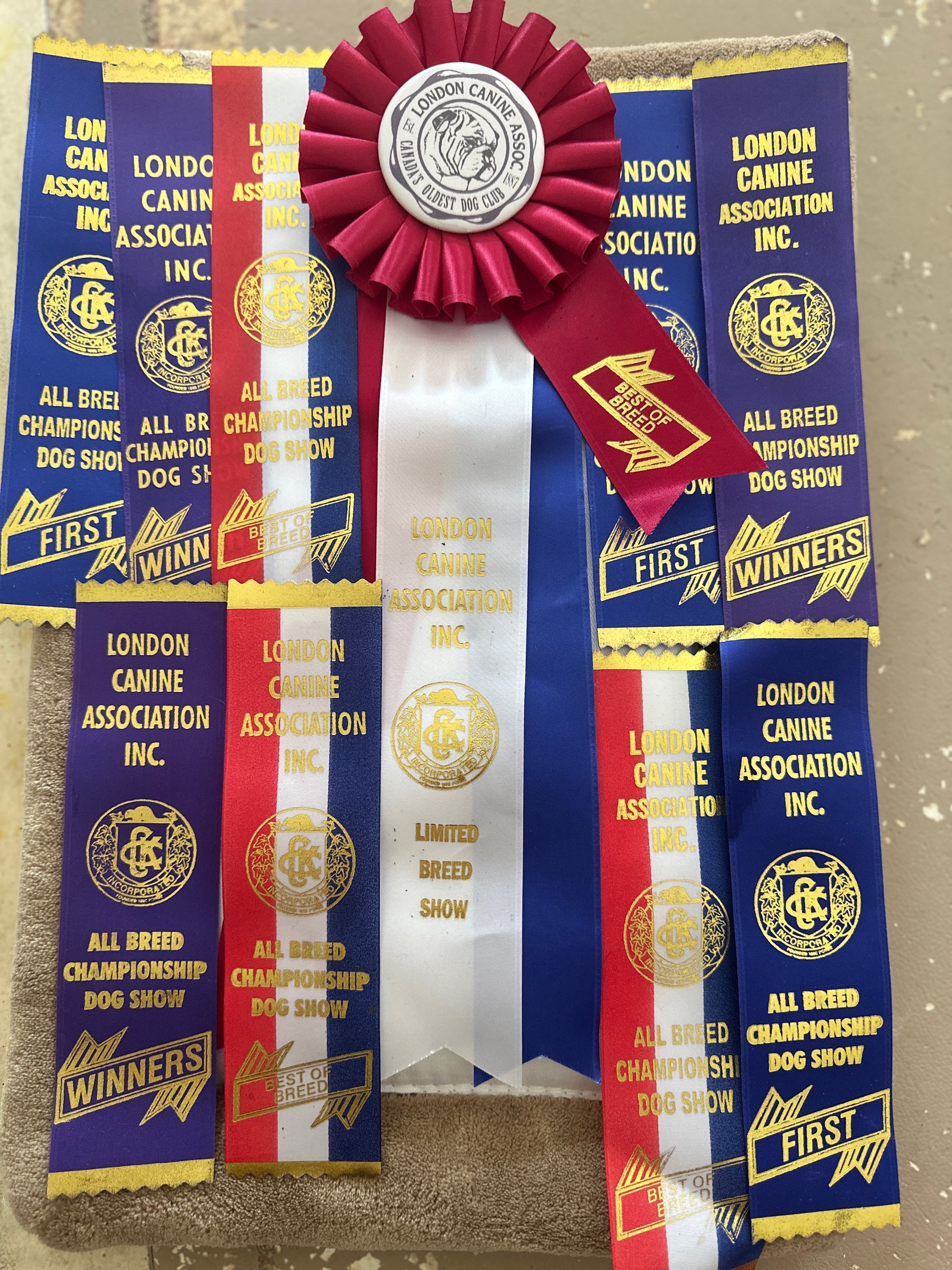
Now, let's talk about reality. Breeding is not all fluffy puppies, matching show outfits, beautiful ribbons, and adorable family photographs.
There are sleepless nights beside the whelping box, unexpected veterinary visits, difficult deliveries, and decisions that carry enormous emotional weight. There are puppies who need extra attention, worried mothers, unexpected complications, and moments when you desperately wish nature would follow the carefully prepared plan.
Sometimes you spend the entire night monitoring a litter, only to discover that the puppy who kept you awake until 4 a.m. has absolutely no intention of sleeping through the following night either.
And motherhood doesn't pause because you have a litter. Children still need breakfast. Homework still exists. Someone needs clean clothes. Groceries don't magically appear, and apparently, mothers are expected to know the location of every missing object in the household. Meanwhile, somewhere in the background, a puppy has decided the water bowl is a swimming pool.

There are days when I feel like I've completed three full working days before lunchtime. And let's not forget the emotional side of breeding. Not every puppy stays with us. Not every pregnancy or delivery goes according to plan. Sometimes we face heartbreak that cannot be explained in a cheerful social media caption.
Responsible breeding means accepting both the beautiful and difficult parts of the journey. Motherhood isn't particularly glamorous either. Both jobs involve sleepless nights, questionable hygiene, endless cleaning, and occasionally wondering why everyone is looking at you when something goes wrong.
The difference? At least puppies don't ask for screen time.
More Than Ribbons and Championships
One thing I want our children to understand is that a dog is never just a trophy, and a ribbon is never the measure of someone's worth. Dog sports teach teamwork, sportsmanship, and how to handle disappointment.
Not every show day ends with a win. Not every training session goes smoothly. Sometimes the dog has other plans, sometimes the handler makes a mistake, and sometimes someone else simply does a better job. That's perfectly fine.
What matters is learning, improving, respecting others, and coming back ready to try again. I want our children to appreciate the effort behind an achievement, not just the achievement itself.


Raising the Next Generation
When I watch our children working with their dogs, helping with puppies, and celebrating their achievements, I realize that we are building something bigger than a kennel. We are creating memories and passing on values.
I want them to understand the dedication behind responsible breeding, the importance of preserving our breeds, and the privilege of being involved in raising another generation of dogs.


I hope they remember the excitement of new litters, their first successful handling classes, the road trips, the show weekends, and the puppies who somehow managed to turn a perfectly clean room into a disaster zone in approximately seven minutes.
The Last Samurai Way
At Last Samurai Kennel, we talk a lot about preserving our breeds, developing sound temperaments, responsible breeding, and raising puppies prepared for life with their future families. But there is another part of our philosophy that matters just as much to me: passing that knowledge and appreciation on to the next generation.
We aren't just raising Samoyeds and Shiba Inu. We are raising children who understand what it means to care for another living being, work towards a goal, and appreciate the results of their efforts.
And if they decide to continue the family tradition one day, I hope they inherit my love for dogs, dedication to the breeds, and perhaps a little more organizational ability than their mother. Although, judging by the current state of our household, that last part might be asking for too much.
Three children. Two breeds. A house full of dogs.
Countless muddy paws, endless puppy kisses, a mountain of ribbons, and a mother who runs on coffee, determination, and the occasional miracle.
Would I choose this life again? Every single time.
Welcome to Last Samurai Kennel. Where we raise champions, nurture little personalities, create lifelong memories, and occasionally wonder who exactly is in charge of this circus. Spoiler alert: It is usually the dogs.

Comments