HEALTH TESTED PARENTS DO NOT GUARANTEE PERFECT PUPPIES!
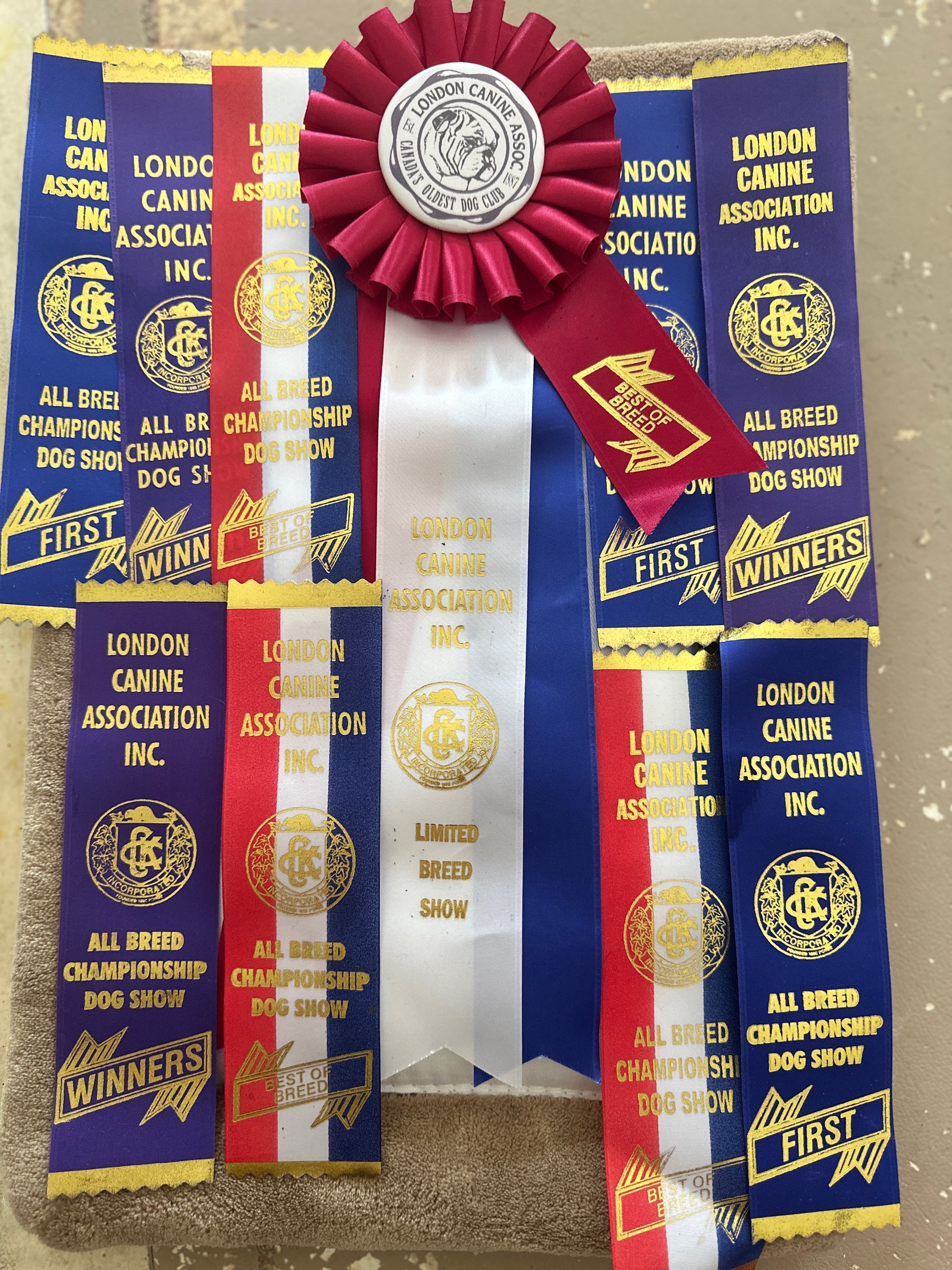
Lessons, advice and a little wisdom passed down from experienced breeders.

One of the things I have come to appreciate most about being involved in the world of purebred dogs is how much there is to learn, and how much of that knowledge comes from the people who have been doing this long before us.
Over the years, through conversations, advice, shared experiences and sometimes very honest discussions with mentors in both the Shiba Inu and Samoyed communities, I have been given plenty of words of wisdom.
Some lessons make sense immediately. Others take years, a few litters and plenty of experience before you truly understand what someone was trying to teach you.
There is one particular lesson that has stayed with me:
HEALTH-TESTED PARENTS DO NOT GUARANTEE PERFECT PUPPIES!
It sounds obvious when you think about it, yet it is something that is surprisingly easy to forget when we look at beautiful health certificates and impressive pedigrees.
Having two dogs with excellent health clearances does not mean we are guaranteed a litter of perfectly healthy puppies.
You can have two beautiful dogs with excellent hip scores and still produce a puppy with less-than-ideal hips.
You can breed dogs with perfectly healthy eyes and have an offspring develop an eye condition later in life.
You can have generations of apparently healthy dogs and suddenly discover something in a particular bloodline that deserves a closer look.
And sometimes, you simply don't see it coming.
One of the things experienced breeders have reminded me is that genetics do not work like a mathematical formula. We can study pedigrees, complete recommended health testing, learn about the dogs behind our breeding stock and make informed decisions. But we cannot predict every genetic combination or guarantee what a puppy's health will look like throughout its lifetime.
A health certificate is a snapshot, not a lifetime warranty.
IT'S NOT JUST ABOUT WHAT YOUR DOGS PASS. IT'S ABOUT WHAT THEY PRODUCE!
It is relatively easy to show someone the health results of your breeding dogs. What takes much more commitment is following the puppies after they leave your home.
How are they developing? What do their hips look like when they mature? Are there recurring health concerns? Are families reporting something that deserves attention?
Do we stay in touch with our puppy families? Do we ask questions? And perhaps most importantly, are we prepared to listen when the answers aren't necessarily what we hoped to hear?
One of the greatest lessons passed down to me is that a breeding dog must be evaluated not only by its own qualities, but also by the qualities it passes on to its offspring.
A dog can be beautiful, have an excellent pedigree, hold championship titles and pass every required health test. Yet, if its offspring consistently show concerning patterns, that information cannot simply be ignored.
Sometimes it means reconsidering a planned mating. Sometimes it means deciding not to repeat a particular combination. And sometimes it means making the difficult decision to remove a dog from a breeding program.
Those decisions are rarely easy.
We invest years into our dogs. We watch them grow, show them, celebrate their achievements, raise their puppies and become attached to the hopes we have for their future.
But one piece of wisdom I have heard more than once from experienced breeders is that we should never become so attached to a dog or a particular breeding plan that we stop being objective.
Our responsibility is to the breed and to the generations that come after us.
That is a lesson worth remembering.
HEALTH TESTING IS A TOOL, NOT A CRYSTAL BALL!
Another important thing I have learned is that health testing is not a finish line.
Different breeds have different health considerations. What we look for in a Shiba Inu isn't necessarily identical to what we look for in a Samoyed. Each breed has its own health recommendations, genetic considerations and areas that responsible breeders need to understand.
Some conditions develop with age. Some require repeated screening. Others are influenced by multiple genes and environmental factors.
A dog that is perfectly healthy today may develop a condition later in life.
This is why following our puppies throughout their lives matters so much.
I have often heard experienced breeders emphasize that the relationship with a puppy family should not end when the puppy goes home. And the more I learn about breeding, the more I understand the importance of that advice.
We should want to know how our puppies are doing at six months, two years, five years and beyond.
Not just when they are winning in the show ring or sending us beautiful Christmas pictures (although we certainly love those too!).
We should want to know how they are growing, how they are feeling and whether anything has come up that might help us make better decisions in the future.
Every puppy we produce becomes part of the bigger picture of our breeding program.
And sometimes, information shared by a puppy family can be just as valuable as another health certificate added to our files.
THE DIFFICULT DECISIONS ARE PART OF BREEDING
One of the most important things mentors have taught me is that responsible breeding is not always about what we choose to do. Sometimes it is about what we choose NOT to do.
Not every beautiful puppy needs to become a breeding dog.
Not every champion needs to continue in a breeding program.
Not every planned mating needs to happen simply because we have spent years working towards it.
And passing health tests does not automatically mean a dog is the right candidate for breeding.
There is a difference between having a dog that meets the requirements on paper and having a dog that genuinely contributes something valuable to the next generation.
Sometimes the most responsible decision is to take a step back, reconsider and change direction.
It is not an admission of failure. It is part of learning to breed responsibly.
NO BREEDER HAS ALL THE ANSWERS
One thing I have come to appreciate about experienced breeders is that the good ones never stop learning.
Even decades of experience cannot eliminate every unexpected outcome. No breeder can promise genetically perfect puppies, and no breeding program is immune to health issues.
But there is a difference between producing a puppy with an unexpected health concern and refusing to acknowledge that something might need attention.
The advice I have received over the years has repeatedly brought me back to the same principles:
Listen to the families who have your puppies.
Pay attention to what your dogs produce.
Study your bloodlines, not just individual dogs.
Be honest about what you discover.
And never let pride, titles, beautiful pedigrees or personal attachment interfere with making the right decision for the breed.
These are not lessons learned overnight. They are reminders passed from one generation of breeders to another, often through years of experience and sometimes through mistakes that teach us more than any textbook ever could.
As someone who continues to learn from mentors in both the Shiba Inu and Samoyed worlds, I find these reminders especially valuable.
We are all responsible for the decisions we make today, but we are also borrowing something from the breeders who came before us: their knowledge, their experience and the work they put into preserving the breeds we love.
And one day, the next generation of breeders will be looking to us for that same guidance.
So, perhaps the most important question isn't whether both parents passed their health testing. It is whether we are willing to keep learning from what those parents produce.
Because responsible breeding isn't about proving that our dogs are perfect.
It is about respecting the knowledge passed down to us, learning from every generation and doing our best to leave the breeds a little better for those who come after us.

Comments