THE SHIBA INU THROUGH THE DECADES. Part 5: THE SHIBA INUOF TOMORROW. Preserving a Legacy for the Next Generation
A breed’s history is not simply a record of what happened before us. It is a responsibility handed from one generation to the next.
Over the course of this series, we have followed the Shiba Inu from its roots as a small Japanese hunting dog, through regional bloodlines, the devastation of war and disease, and the dedicated preservation work that helped save Japan’s native dogs. We have also looked closely at the standard, traditional appearance, coat colours and the character that makes the Shiba unmistakable.
Now we arrive at the question that matters most: what happens next?
The Shiba Inu has survived extraordinary challenges. Its future is unlikely to be decided by a single dramatic event. More often, it will be shaped by thousands of ordinary choices: which dogs are bred, which traits are valued, what breeders teach puppy families, what judges reward, and what young people learn when they first step into the dog world.
In other words, the future of the Shiba is being built long before tomorrow arrives.
Popularity is not the same as preservation
The Shiba Inu’s international popularity is a remarkable success story. Dogs that were once closely associated with particular regions of Japan are now cherished companions in homes around the world. Greater visibility can bring interest in the breed’s history, more opportunities for responsible ownership and a wider community of people willing to support its preservation.
But popularity also changes the pressures surrounding a breed. Demand can encourage shortcuts. Fashion can begin to influence selection. A rare colour, an especially plush coat, a tiny body or an exaggerated expression may attract attention online, even when those features do little to improve the dog’s health, function or temperament.
There is nothing wrong with admiring a beautiful Shiba. We certainly do. But a photograph cannot tell us whether a dog moves soundly, has a stable temperament, comes from a thoughtfully managed pedigree or contributes positively to the long-term health of the population.
A breed can become more visible while its original qualities become less understood. That is why popularity must be accompanied by education.
Preserve the whole dog
Preservation breeding is not a search for one perfect feature. It is the careful consideration of the complete animal: health, temperament, structure, movement, genetic background and the ability to live a good life with people.
The Shiba should remain recognisably a Shiba—not a caricature of one. Its compact, athletic construction, natural proportions, alert expression and characteristic independence all belong to a functional whole. The traditional Japanese ideals often expressed through kan-i, ryōsei and soboku remind us that spirited dignity, good nature and unpretentious naturalness are not separate decorations. They are qualities that should be considered together.
No single show result, fashionable colour or impressive photograph can replace that broader assessment. Nor should a dog’s strengths be used to excuse serious weaknesses elsewhere. Responsible breeders must be willing to look honestly at their own dogs, their pedigrees and the results of their decisions.
Health testing is part of that responsibility, but it is not the entire answer. Testing helps breeders make informed decisions; it does not guarantee that every puppy will be free of every inherited condition. Good records, open communication, appropriate veterinary care and thoughtful follow-up with puppy families all matter.
Genetic diversity deserves equal attention. Repeatedly relying on a small number of popular sires can narrow the gene pool, even when those dogs are outstanding individuals. A successful breeding program should look beyond immediate wins and consider how each mating affects the population over time. The goal is not simply to produce the next generation. It is to leave breeders in the future with healthy, useful choices.
Temperament is part of the inheritance
The Shiba’s independence is one of its defining characteristics. It is also one of the qualities most easily misunderstood. Independence should not be confused with poor socialization, fearfulness or an inability to form a relationship with people.
A sound Shiba can be confident and self-possessed while still being responsive to its family. It can retain its opinions—sometimes very strongly held opinions—without being difficult to live with. Anyone who has negotiated with a Shiba about coming inside on a rainy day knows that cooperation may occasionally require diplomacy.
At Last Samurai Kennel, we value Shibas who are socially interactive and capable of meaningful communication with the people around them. We want to preserve the breed’s characteristic spirit, not dilute it; but we also believe that good temperament should make everyday life richer and safer for both dogs and people.
This is why the work does not end when a puppy leaves the kennel. Thoughtful placement, education, support and honest conversations with families are all part of responsible breeding. The way a dog is raised and understood will influence how its natural character develops.
The next generation is already here
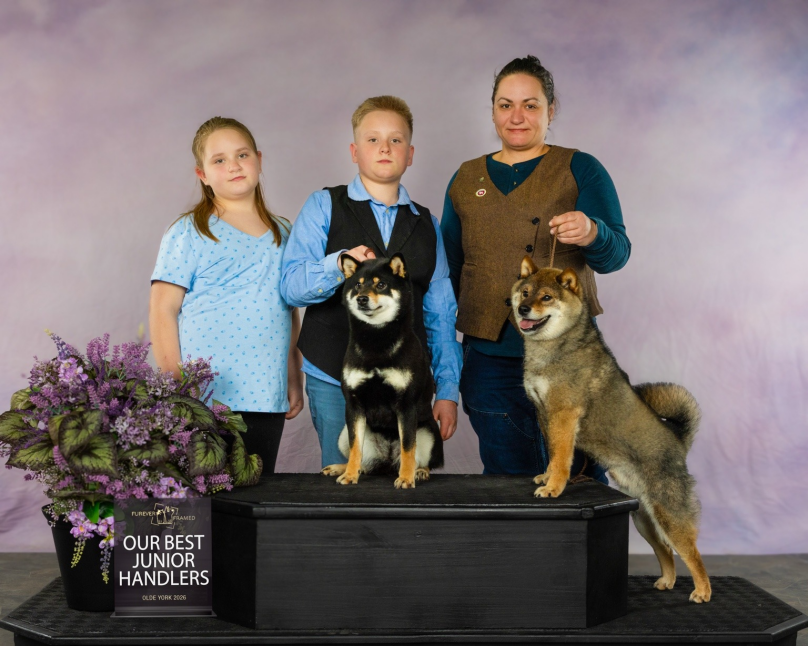
One of the most encouraging things in the dog world is seeing children and young people become genuinely involved with dogs. They learn by watching, helping, asking questions and gradually taking on age-appropriate responsibilities. They discover that a dog is not a trophy, a social-media accessory or a guaranteed ribbon. It is a living individual with needs, preferences and a personality of its own.

Participation can begin with simple things: learning how to approach a dog respectfully, helping with grooming, preparing equipment, observing training, understanding why health checks matter or accompanying an adult to a show. As young people gain experience, they may become junior handlers, exhibitors, volunteers, mentors or future breeders.
The show ring can be a wonderful classroom, but it is only one classroom. The most important lessons often happen away from the spotlight: recognizing when a dog needs space, reading body language, accepting that not every dog enjoys the same activities, and understanding that the animal’s welfare comes before an award.
Children should never be expected to carry adult responsibilities for breeding decisions or animal care. Those responsibilities remain with the adults. Our role is to provide safe opportunities, good examples and patient guidance—so that interest can grow into knowledge rather than pressure.


We should also make room for young people who are interested but do not want to compete. Some will become excellent owners, trainers, groomers, veterinarians, researchers or advocates for responsible dog welfare. The future of a breed depends on a much wider community than the list of people whose names appear on pedigrees.


Passing on more than pedigrees


Pedigrees preserve information about ancestry. They do not automatically pass on wisdom. That comes from the conversations breeders have, the records they keep, the mistakes they are willing to discuss and the standards they are prepared to uphold when an easier option is available.
Young people entering the dog world need to see ethical breeding demonstrated in practice. They should see breeders who health-test, who are honest about strengths and weaknesses, who place puppies carefully, who remain available to their families and who take responsibility for the dogs they produce.
They should also learn that preservation is not nostalgia. We cannot simply attempt to recreate a dog from an old photograph or assume that every historical practice should be repeated. We must respect the past while applying current knowledge about health, genetics, behaviour and welfare.
The most valuable inheritance we can offer is the ability to think critically: to ask why a particular trait matters, what evidence supports a breeding decision, what risks may be present and whether the choice serves the breed beyond the next litter.
Our responsibility as breeders
At Last Samurai Kennel, we believe breeding should be guided by respect for the breed’s country of origin, its traditional purpose and the qualities that make it distinct. We do not believe in breeding for fashionable exaggeration or allowing unusual colour trends to take priority over the complete dog. Health, sound temperament, correct structure and responsible genetic planning must remain central.
No breeder can control every aspect of a breed’s future. We can, however, control the decisions we make, the standards we support and the example we set. We can choose to share knowledge rather than guard it, to mentor rather than discourage, and to place the welfare of dogs ahead of convenience or recognition.
We can also remember that ethical breeding is not measured by the number of litters produced, the number of titles collected or the speed at which puppies are placed. It is measured by the quality of the lives we help create and the contribution our decisions make to the breed over time.
A legacy is something we pass forward
The people who helped save the Shiba Inu could not know exactly what the breed would become decades later. They worked with the dogs and knowledge available to them, under circumstances many of us can scarcely imagine. Their dedication gave later generations the opportunity to know and appreciate the Shiba Inu.
We have inherited that opportunity. We also inherit the responsibility.
One day, the future of the Shiba Inu will rest in the hands of people who are children today. Some of them may become breeders. Others may become handlers, judges, veterinarians, researchers or simply thoughtful owners who teach their own families to respect dogs. What matters is that they understand the value of the animal entrusted to them.
That understanding begins long before someone registers a kennel name or plans a first litter. It begins when a child learns to approach a dog gently, when a young handler earns a dog’s trust, when a family discovers the history behind the breed they love, and when an experienced breeder takes the time to explain not only what they do, but why.
We are not simply breeding the next generation of Shibas. We are helping raise the next generation of people who will protect them.
And perhaps that is the most important part of preservation: not keeping a breed frozen in the past, but making sure that its character, health and identity have a future.
The Shiba Inu was worth saving. It remains worth understanding. And it will remain worth preserving—if we teach the next generation to care about more than how beautiful it looks in a photograph.
“We inherited the breed’s history.It is our responsibility to protect its future.”
Series conclusion
The Shiba Inu Through the Decades — a five-part historical series by Last Samurai Kennel.
From the original Japanese hunting dog to the Shiba Inu of today, this series has explored the breed’s origins, regional bloodlines, near disappearance and recovery, traditional standard, appearance, temperament and the responsibility of preserving its future.
Thank you for joining us on this journey. The story of the Shiba Inu continues—in every thoughtful breeding decision, every well-raised puppy and every young person who learns to respect the breed.
LAST SAMURAI KENNEL


Comments