The Missing Chapters of Puppy Raising: A Breeder’s Honest Advice to New Puppy Owners
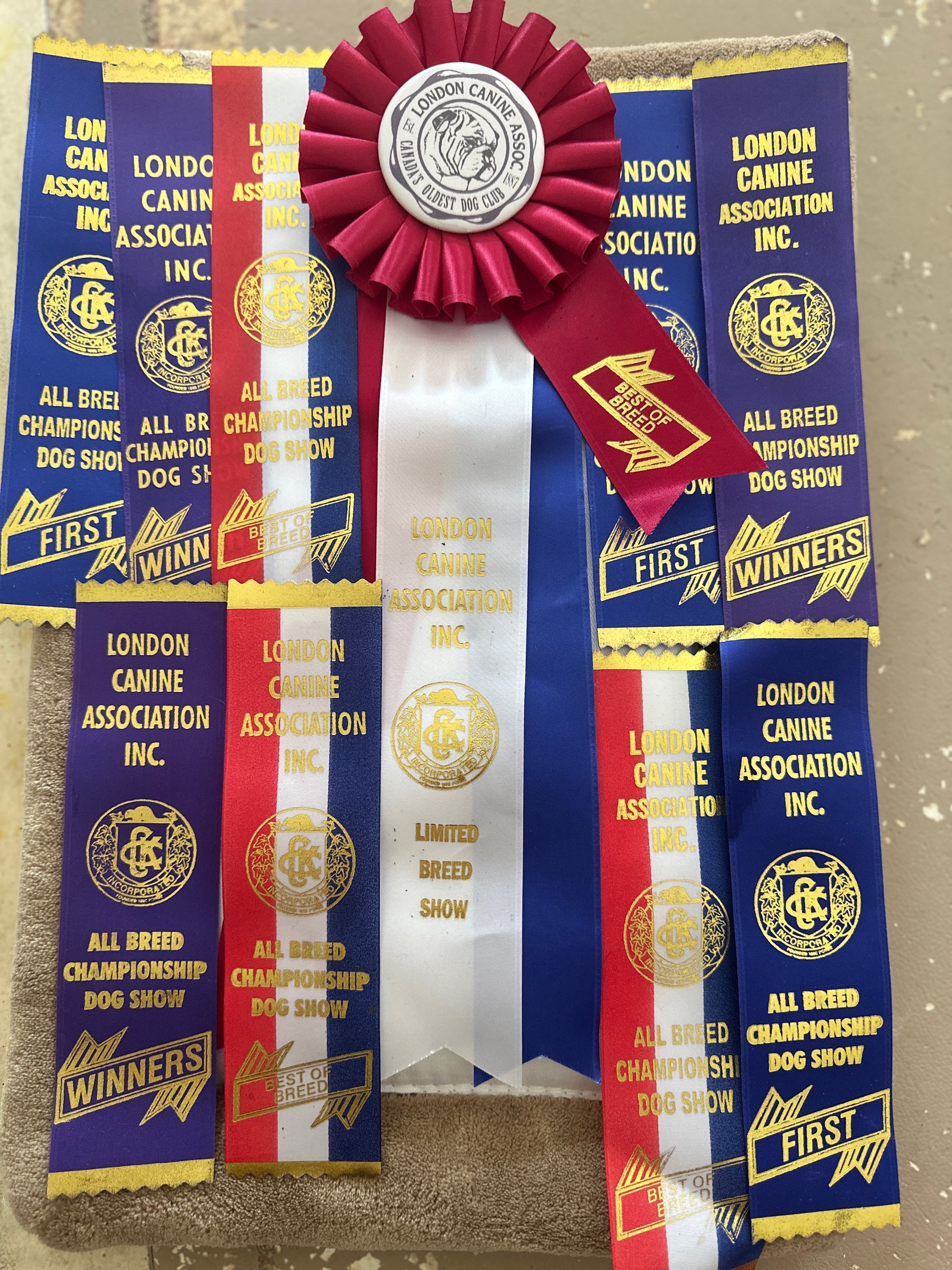

By a breeder who has been in your shoes more often than you might think.
Over the years, I’ve read the books, watched the videos, attended the seminars, raised puppies, advised puppy families, and experienced more than a few of those special moments when you look at a tiny, fluffy creature and wonder how something so adorable can simultaneously make you question every life decision you’ve ever made.
As a breeder, I spend a great deal of time preparing new puppy owners for life with their little bundles of joy. I explain socialization, house-training, grooming, handling, routines, boundaries, and all the other important things a growing puppy needs to learn.
But there is another side to raising a puppy that rarely makes it into the glossy photographs or carefully edited YouTube videos. It’s the part where you’re standing in your kitchen at an unreasonable hour, holding a mop in one hand, a half-chewed slipper in the other, and wondering whether your puppy has somehow been replaced by a small, furry criminal. So, consider this my contribution to the puppy-rearing literature: the missing chapters nobody thinks to include until you’re living through them.
My goal is simple. I want you to know that what you’re experiencing is often perfectly normal. You are not failing as a puppy owner. Your puppy is not possessed by an ancient evil spirit. And you will almost certainly not complete every exercise in every puppy book before the socialization window begins to close.
That’s okay. Take a breath, put the mop down, and let’s talk about it.
1. You Will Be Tired. No, Really. Tired.
Everyone tells you that puppies need nighttime potty breaks. You know this before bringing your puppy home. You have mentally prepared yourself for a few interrupted nights, reminding yourself that it’s temporary and that soon enough, everyone will be sleeping peacefully again.
How bad can it possibly be?
Let me tell you.
The problem isn’t just the nighttime potty break. It’s that you have already spent the entire day supervising a curious little creature whose hobbies include eating questionable objects, investigating forbidden corners, and turning your shoelaces into a competitive sport. By bedtime, you are exhausted. Then your puppy wakes you up just as you’ve finally entered the deepest, most beautiful stage of sleep known to humankind.
You get up. You take him outside. You wait. He sniffs a leaf, examines a shadow, and considers the philosophical implications of a blade of grass. Eventually, he does his business. You return to bed, hoping for a few precious hours of uninterrupted sleep. And then he wakes up again. Repeat this routine until your morning coffee begins to feel less like a beverage and more like a medically necessary intervention. The next morning, your puppy is bright-eyed, bushy-tailed, and ready to explore the universe. You, meanwhile, are wondering whether it would be socially acceptable to attend a work meeting wearing pajamas and carrying a pillow.
The truth is that puppies mature at different rates, and there is no universal date when they suddenly decide that sleeping through the night is a wonderful idea.
Some get there quickly. Others prefer to keep their people on a rather demanding night shift.
My advice: Take rest whenever you can reasonably manage it. If your puppy is safely settled and you have ten minutes to close your eyes, take them. If someone offers to watch the puppy while you nap, accept graciously. You do not need to prove your dedication by functioning on three hours of sleep and sheer determination.
And please, silence your phone before your emergency nap. There is nothing quite like finally drifting off only to be awakened by a notification informing you that someone has liked a photograph of your lunch.
Your puppy will grow. Your sleep will improve. Until then, do what you can to preserve your sanity.
2. You May Lose Your Cool. Welcome to Being Human.
You love your puppy. You adore his little face, his soft ears, his clumsy paws, and the way he follows you around as if you are the most fascinating person in the world.
And then, for the seventeenth time that morning, he bites your trouser leg while you are trying to make breakfast.
You redirect him. He bites your hand.
You offer him a toy. He prefers your sleeve.
You try to walk away. He attaches himself to your ankle like a furry, four-legged accessory.
Suddenly, you hear yourself speaking in a tone you normally reserve for people who cut in front of you in traffic.
You may snap at your puppy. You may become impatient with your family. You may even find yourself sitting on the floor wondering why you ever thought bringing home a puppy was a good idea.
First, please understand that feeling overwhelmed does not mean you don’t love your puppy. It means you are human, you’re tired, and you have taken on a demanding new responsibility.
Raising a puppy comes with a surprising mixture of emotions. One minute, you are completely smitten. The next, you are negotiating with a tiny animal who has decided that your hand is a chew toy and your carefully planned afternoon is optional.
Puppies also have very little control over their impulses. Their moods can change in seconds. They may go from peacefully snoozing to racing around the room, from sweet little cuddle bugs to enthusiastic ankle-biters, seemingly without warning. And because everything is new to them, they investigate the world with their noses, paws, and, most frequently, their mouths. That includes things you didn’t even realize were accessible.
You may have puppy-proofed your home. Your puppy will be delighted to conduct an independent inspection and identify the remaining twenty-seven safety violations.
As the days pass, fatigue and frustration can make even ordinary puppy behaviour feel enormous.
My advice: Give yourself permission to be imperfect, but don’t let frustration dictate how you handle your puppy. If you feel yourself reaching your limit, make sure your puppy is in a safe, comfortable place, step away briefly if appropriate, and take a breath.
Use those precious moments when your puppy is asleep to do something that makes you feel like yourself again. Read a book, enjoy a quiet cup of tea, take a shower without an audience, or simply sit in silence.
You may also find enormous comfort in talking to other puppy owners. Those who have survived puppyhood will often smile knowingly when you describe your latest challenge. Some may even admit that they’ve cried over a puppy who weighs less than a bag of groceries.
You are not alone.
And if you find yourself repeatedly overwhelmed, ask for help from your breeder, a qualified trainer, or someone you trust. There is no prize for doing everything by yourself.
3. Say Goodbye to Your To-Do List. Temporarily.
I love a good to-do list. In fact, I can add tasks to a list almost as quickly as I complete them.
Unfortunately, a puppy has absolutely no respect for my productivity system.
Before the puppy arrives, you imagine that your days will proceed more or less as usual. You’ll work, cook, clean, answer emails, run errands, and fit in a little puppy training along the way.
Perhaps you’ll even have time to organize that cupboard you’ve been meaning to tackle since last spring.
Then the puppy arrives.
Suddenly, every task takes three times as long because someone needs to go outside, someone has discovered a sock, someone is chewing a chair leg, and someone else is barking because the first someone has a toy. That someone, of course, is the same puppy.
Your once-impressive list of twelve daily accomplishments becomes a modest collection of two items:
Keep puppy alive, safe, and reasonably happy.
Remember to feed yourself.
Some days, even these feel ambitious.
As a breeder and a mother of three, I know very well what it means to juggle responsibilities. Add a busy household, livestock, property maintenance, and puppies who have their own schedules, and you quickly discover that time management has its limits.
A puppy does not care that you have laundry waiting, an email to answer, or a deadline approaching. If he needs to go outside, he needs to go outside. If he’s overtired, he may suddenly turn into a miniature tornado. And if he has found something interesting on the floor, your plans may be put on hold while you investigate whether it is safe.
My advice: Reduce your expectations of yourself for the first few weeks. Keep your priorities simple, delegate what you can, and let the nonessential chores wait.
The laundry will survive. The dust will not file a formal complaint. Your house does not have to look like a magazine spread to raise a wonderful dog.
Most importantly, use some of that time to experience the world with your puppy. Socialization, gentle handling, positive exposure to everyday life, and building a relationship with you are far more valuable than a perfectly folded pile of towels.
You can clean the house later.
Your puppy will not stay little forever, and unfortunately, there is no way to put puppyhood on pause while you catch up on your chores.
4. Is Your Puppy Possessed? Or Just Exhausted and Hungry?
Over the years, I’ve received plenty of worried messages from puppy owners.
“He’s attacking us!”
“She suddenly turns into a little monster!”
“He was perfectly lovely five minutes ago. What happened?”
Sometimes, these descriptions sound alarming until you see the puppy in action.
Many young puppies become intensely mouthy when they’re overtired, overstimulated, frustrated, or in need of a suitable outlet for their energy. Their coordination is still developing, their impulse control is limited, and they haven’t yet learned how to manage all the exciting sensations happening inside their little bodies.
Unfortunately, their preferred method of communication may involve sharp little teeth and a dramatic soundtrack.
I learned this lesson personally with one of my keeper puppies, Charlie, when he was about four months old.
Charlie was normally a lovely puppy. Then one day, he suddenly launched into a spectacular case of the zoomies. He raced around with his ears back and his eyes wide, charged toward me, grabbed my trouser leg, and began tugging at it with the enthusiasm of a puppy who had just discovered an exciting new career in textile destruction.
He was growling, whining, wriggling, and generally behaving as though he’d been given a starring role in a very low-budget monster movie.
I tried to redirect him. I tried to distract him. I tried to understand what on earth had happened to my sweet little puppy.
Nothing seemed to work.
Eventually, I helped him settle safely in his crate, hoping that a little quiet time would help him regain control. Within minutes, he was asleep.
A short while later, he woke up and began calling out. I checked his needs rather than assuming he was simply being difficult. Although it wasn’t his usual mealtime, I offered him a small portion of food, and he settled again before waking later as his usual happy self.
Over the following days, I began to recognize the pattern. For Charlie, a combination of hunger and fatigue could produce some rather dramatic behaviour.
He wasn’t plotting against me. He wasn’t challenging my authority. He wasn’t auditioning for a role in a horror film.
He was a young puppy who hadn’t yet learned how to regulate himself.
Now, an important distinction: not every episode of intense biting or unusual behaviour should automatically be dismissed as normal puppy antics. Pain, illness, fear, and genuine behavioural concerns can also affect behaviour. If episodes are frequent, severe, escalating, or accompanied by other worrying changes, consult your veterinarian and, when appropriate, a qualified canine behaviour professional.
But before you assume your puppy has developed a sinister personality overnight, consider the basics.
My advice: When your puppy seems to have lost his little mind, pause and ask yourself:
Is he tired? Puppies need plenty of sleep, and overtired puppies can become increasingly excitable rather than settling down on their own.
Is he hungry? Make sure his meals are appropriate for his age and feeding plan.
Does he need to go outside? Sometimes the answer is much less mysterious than it appears.
Is he overstimulated or frustrated? He may need a quieter environment and help settling.
Does he need company or reassurance? Puppies are still learning to feel secure when separated from their people.
Think of these as your first checks, not a complete diagnosis.
And please remember that a crate should be a safe, comfortable resting place, not a punishment. If your puppy is distressed, frightened, or showing signs of illness or pain, respond to what he needs rather than simply trying to make the behaviour stop.
Sometimes, the most effective puppy-training tool is not another command, another toy, or another online tutorial.
Sometimes, it is a nap.
For everyone involved.
5. Socialization: Do Your Best, Not the Impossible.
As a breeder, I cannot emphasize enough how important appropriate early socialization is. Puppies benefit from positive, carefully managed experiences that help them become comfortable with the world around them.
I regularly encourage new puppy families to introduce their puppies to a variety of people, sounds, surfaces, environments, handling experiences, and everyday situations.
I can provide a lovely checklist, explain the importance of timing, and recommend plenty of things to practise during those precious early weeks.
And then life happens.
Even as a professional breeder, I haven’t always managed to accomplish every item on my own socialization lists.
I have three children, a busy household, livestock, and a substantial property to maintain. There are days when simply getting through the essential tasks requires a carefully coordinated operation worthy of a small military unit.
So when I tell puppy owners to provide a wide variety of positive experiences, I am not suggesting that they must personally introduce their puppy to every sound, surface, object, person, vehicle, and geographical feature known to civilization before the puppy turns twelve weeks old.
If that were the requirement, most of us would need a personal assistant, a chauffeur, and possibly a small grant.
The goal is not to complete a checklist for the sake of completing it. The goal is to help your puppy develop confidence and learn that the world can be a safe and interesting place.
A puppy who will live in a quiet rural home may need different experiences from one who will regularly travel on public transit, visit busy urban areas, or accompany a family to crowded events.
That doesn’t mean rural puppies should never encounter traffic or that city puppies need to experience everything imaginable. It means you should prioritize experiences that are relevant to your puppy’s future while gradually building a broader foundation of confidence.
For example, if you live on a property with livestock, calm and safe exposure to the sights, sounds, and smells of those animals may be particularly valuable. If your puppy will visit a groomer regularly, positive handling and gentle grooming practice deserve special attention. If you live in a busy neighbourhood, the everyday sounds and sights of that environment will matter.
And remember: socialization is not a competition to see how many experiences you can cram into a weekend.
A puppy who is frightened or overwhelmed is not necessarily benefiting from the experience. Give your puppy distance, choice where possible, time to observe, and rewards for calm, comfortable engagement. Let him progress at his own pace.
Also, follow your veterinarian’s guidance on vaccination, disease exposure, and safe opportunities to meet other dogs. You can provide many useful experiences without putting your puppy in unsafe situations.
My advice: Look at your puppy’s future life and decide which experiences deserve priority. Focus on quality rather than quantity.
If you have time to introduce your puppy to twenty carefully chosen experiences, do those twenty well. There is no need to panic because you haven’t managed all one hundred items on a generic socialization checklist.
And please don’t turn socialization into a source of guilt.
I now try to give new puppy families advice that sounds a little more like this:
“Here is what I’d ideally like you to do. Make a reasonable plan. Be patient. Let your puppy sniff the grass. Introduce him to the world in a positive, age-appropriate way. Enjoy your time together. And if you’re exhausted, overwhelmed, and beginning to suspect that your eight-pound puppy is somehow managing the entire household, send me a message.”
Because that is precisely what breeders are here for, too.
We don’t expect you to be perfect. We want you to have the knowledge, support, and confidence to raise a happy, well-adjusted dog.
6. Your Puppy Is Not Reading the Same Book You Are.
You’ve bought the books. You’ve watched the videos. You’ve signed up for puppy kindergarten. You have highlighted important paragraphs, saved training posts, and possibly developed a small collection of screenshots that you fully intend to revisit when you have time.
You are prepared.
Then your puppy arrives and demonstrates that he has absolutely no intention of following the syllabus.
The book says to practise a short training session. Your puppy eats the treat before you’ve finished explaining the exercise.
The video shows a puppy calmly responding to a cue. Yours is investigating a mysterious mark on the floor.
The instructor recommends practising in a quiet environment. Your puppy has decided that the sound of the refrigerator is the most fascinating thing he has ever heard.
Welcome to real life.
Books, videos, and classes are wonderful resources. They provide information, techniques, and a foundation for understanding your puppy. But they cannot account for every individual puppy, every household, or every day.
Some puppies learn certain skills quickly and take longer with others. Some need shorter sessions, more rest, or a different reward. Some seem to understand an exercise at home and promptly forget it when they encounter a new environment. That is part of learning.
Your job is not to turn your puppy into a perfectly trained dog by following every instruction exactly as written. Your job is to build good habits gradually, make learning worthwhile, and adapt your approach to the puppy in front of you.
My advice: Keep your expectations realistic. Attend a good puppy kindergarten class, practise the skills that matter most, and ask questions when something isn’t working.
Short, positive sessions are often more productive than long attempts to force progress. Celebrate the little wins. If your puppy sits when asked, fantastic. If he looks at you instead of eating the leaf he found, that deserves recognition, too.
And if today’s training session consists of three successful repetitions followed by a puppy who falls asleep on his mat, consider it a perfectly respectable day’s work.
7. You Will Worry That You’re Doing Everything Wrong.
At some point, usually when you are tired and scrolling through the internet at an hour when sensible people are asleep, you will encounter a puppy who appears to be doing everything better than yours.
That puppy is already house-trained. He walks politely on a leash. He settles quietly in a café. He greets visitors with impeccable manners and apparently has never considered chewing a shoe.
Your puppy, meanwhile, has just carried a sock into his water bowl and is now trying to bite the mop.
You begin to wonder whether you’ve missed something important.
Perhaps you should have started training earlier. Perhaps you should be doing more. Perhaps everyone else has discovered a secret puppy-rearing manual that you somehow forgot to purchase.
Take a breath.
You are usually seeing a tiny snapshot of someone else’s life, not the entire story. Puppies develop at different rates, and even the same puppy can behave very differently from one day to the next.
Progress is rarely a straight line. A puppy who seemed to understand a skill yesterday may struggle with it today, especially when tired, excited, distracted, or learning in a new environment.
That doesn’t automatically mean you’ve failed or that your puppy is falling behind.
Of course, if you have concerns about your puppy’s development, behaviour, health, or ability to cope with everyday situations, speak with your breeder, veterinarian, or a qualified trainer. Getting help early is a sensible step, not an admission of defeat. But please don’t compare your puppy’s ordinary, messy reality with somebody else’s carefully selected highlight reel.
My advice: Keep a small record of the things your puppy is learning and the progress you notice. You may be surprised by how much has improved over a few weeks.
Celebrate the first successful potty trip outside, the first calm greeting, the first time he chooses a toy instead of your slipper, and the first evening when he settles while you eat dinner.
Those little achievements add up.
You are not raising a robot. You are raising a living, learning creature who needs time, guidance, and a great deal of patience.
8. They Grow Up Faster Than You Think.
Here is the part I really want you to remember.
Puppyhood can feel endless when you’re in the thick of it. The nights are interrupted, the floors need cleaning, your schedule has been rearranged, and you sometimes wonder whether you will ever drink a hot cup of coffee again.
Then, almost without warning, your little puppy is bigger. His legs are longer. His face has changed. He has learned some manners, developed his own personality, and discovered that there are far more interesting things in life than chewing your shoelaces.
One day, you realize that the tiny creature who once needed you for absolutely everything has grown into a dog who knows the household routine, understands your expectations, and has become a familiar part of your everyday life. You may even find yourself looking at old photographs and wondering how that ridiculous little puppy could possibly have grown up so quickly.
This is why I encourage new puppy owners to enjoy the process, even when it is challenging.
You don’t need to enjoy every midnight potty break. You don’t need to feel grateful when your puppy chews something valuable. And you certainly don’t need to pretend that every moment is magical.
You are allowed to find puppyhood exhausting and wonderful at the same time.
Take photographs. Record the funny moments. Notice the little things your puppy does that make you laugh. Spend time playing, exploring, and simply being together.
And when something goes wrong, remember that one difficult afternoon does not define your puppy or your future together.
My advice: Prioritize what matters most. Build a trusting relationship. Provide appropriate socialization, kind and consistent guidance, safe routines, and opportunities to rest and learn. Seek help when you need it, and give yourself permission to grow alongside your puppy.
You do not have to accomplish every exercise in every book. You do not have to keep a spotless home. You do not have to be an expert on your first day.
You simply have to keep learning, keep showing up, and do your best with the puppy in front of you.
And if you ever feel that you’re the only person who has been defeated by a creature small enough to fit in a laundry basket, remember this: even professional breeders have had those days.
We have just learned to laugh about them a little sooner.
A Final Word From Your Breeder
When I send a puppy home with a new family, I hope for many things. I hope that the puppy grows into a healthy, confident, well-mannered dog. I hope the family enjoys training and discovering the puppy’s personality. I hope they create years of wonderful memories together.
But I also hope they understand that raising a puppy is a process, not a performance.
There will be good days and difficult days. There will be moments when you feel wonderfully capable and others when you wonder whether your puppy is secretly in charge of the household.
There will be mistakes, unexpected challenges, and plenty of opportunities to learn.
You may not complete every socialization task on your list. Your puppy may take longer than expected to learn a particular skill. Your house may look as though a small natural disaster has passed through it.
None of these things, on their own, means that you’re doing a bad job.
Do your best to use the information available to you, but don’t let the pursuit of perfection steal the enjoyment of raising your puppy. Focus on the experiences that matter, take advantage of appropriate training and socialization opportunities, and ask for support before a small problem becomes a big one.
Most importantly, remember that your puppy is learning how to live in your world while you are learning how to live with him.
That relationship takes time.
So give yourself some grace. Give your puppy some patience. Keep the mop handy, the treats accessible, and your sense of humour in good working order.
And please, take lots of pictures.
One day, you may look back at those photographs and realize that the little furry tornado who turned your life upside down was also the one who filled it with some of its happiest memories.
You’ve got this. And when you’re not entirely sure you do, your breeder is only a message away.


Comments