The Art of the Cookie: Treats, Training & Raising a Well-Mannered Dog
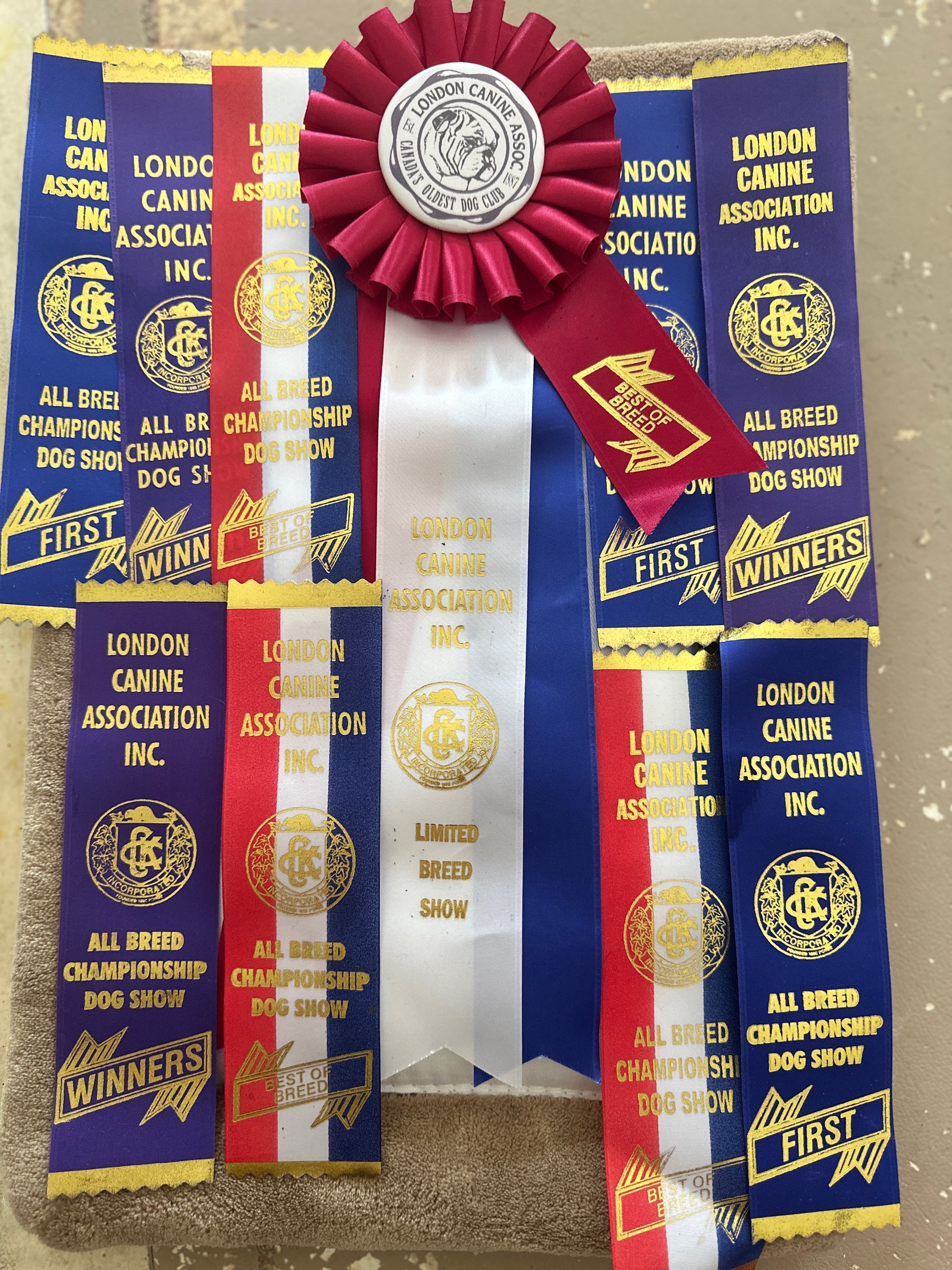
From a breeder's home: understanding food rewards, building good habits, and knowing when your puppy deserves a cookie.

If there is one thing I have learned from raising puppies, it is that dogs are remarkably good at figuring out how the human world works.
They learn where the food is kept, which cupboard contains the good stuff, who is most likely to surrender a piece of chicken under pressure, and, most importantly, how to look absolutely starving approximately seven minutes after dinner.
I have raised enough puppies to know that a treat can be a wonderful training tool. It can also become a rather effective currency in a household where the dog has quickly discovered that humans are surprisingly easy to negotiate with.
But jokes aside, treats play an important role in raising a well-behaved dog. Used correctly, they help us communicate, build confidence, encourage desirable behaviour, and teach puppies how to navigate the world around them.
The trick is knowing what to give, how much to give, and when to put the cookie away.
Because our goal is to raise dogs who understand good manners, not little furry accountants who expect payment for every step they take.
First, let's talk about the cookie budget

One of the most common mistakes puppy owners make is underestimating just how many calories those little rewards contain.
There is a general nutritional guideline worth remembering: treats and extras should make up no more than 10% of a dog's daily calorie intake. The remaining 90% should come from a complete and balanced diet appropriate for the dog's age and nutritional needs.
Why is this important? Because a treat is not nutritionally equivalent to your dog's regular food. Too many extras can unbalance the diet, contribute to weight gain, and displace the nutrients your dog actually needs.
This matters particularly with growing puppies. They are developing rapidly, and their nutritional requirements deserve some consideration beyond how enthusiastically they accept another biscuit.
And believe me, enthusiasm is rarely the problem.
One of my favourite recommendations for young puppies is to use part of their regular daily kibble allowance for training. You already have the food, you know it is appropriate for their diet, and you avoid turning every little training session into an additional meal.
A puppy can learn an impressive number of things with a handful of kibble and a little patience.
Not all cookies deserve a place in the training pouch

Walk into a pet store and you will find enough dog treats to open a small bakery. Cookies, biscuits, freeze-dried meat, soft chews, crunchy snacks, gourmet treats, and products that look suspiciously better than some of the food in my own kitchen.
But bigger, prettier, and more expensive do not necessarily mean better.
When selecting training treats, I look for a few basic things:
· Small portions: A training reward should be small enough to swallow quickly. We want the puppy thinking about the next exercise, not spending the next three minutes working through a biscuit.
· Reasonable calories: Especially important when training happens several times a day.
· Good ingredients: Recognizable ingredients and reputable manufacturers are always preferable.
· Easy digestion: There is no point finding the perfect training reward if it leaves your puppy with an upset stomach.
· Appropriate value: Save particularly exciting treats for exercises that require more effort or concentration.
Remember, your puppy does not need a cookie the size of its head to understand that it has done something right. In fact, most dogs would happily accept several tiny rewards rather than one enormous one.
A little something from the kitchen

Some of the best occasional dog treats are surprisingly simple. Carrots, green beans, peas, blueberries, small pieces of apple without seeds or core, and plain boiled chicken can all make suitable additions to a dog's treat selection.
The important words here are plain and moderation. No seasoning, butter, sauces, salt, or leftover Sunday dinner gravy. Dogs do not need a culinary experience every time they receive a reward.
Introduce new foods gradually, and remember that even healthy extras contribute calories. And please, before sharing something from your plate, check whether it is actually safe for dogs.
Chocolate, grapes, raisins, onions, garlic, macadamia nuts, alcohol, and xylitol (also called birch sugar) are among the foods and ingredients that should be kept away from dogs. Xylitol is particularly concerning because it can be found in some sugar-free products, chewing gum, and toothpaste.
High-fat foods such as bacon and greasy table scraps are also best avoided. They can cause digestive problems and may contribute to pancreatitis.
A good rule in our household: if you are unsure whether something is safe, it does not go into the dog's mouth.
The treat is not the training. The timing is.

Now we get to the interesting part. Having raised and worked with plenty of puppies, I can tell you that one of the biggest differences between a dog who understands an exercise and a dog who simply guesses what you want is timing.
Dogs learn through association. They need to understand which particular action earned the reward.
Let's take the classic puppy sit. You ask for a sit. The puppy sits. You become delighted, reach into your pocket, search for a treat, discover that you have somehow managed to tie the treat bag into a knot, and finally produce a cookie.
By then, your puppy has stood up, turned around, and is investigating something considerably more interesting than your training session. What exactly did you reward?
This is why we use a marker. A marker is a consistent signal that tells the dog, at the precise moment it performs the desired behaviour, that it has got something right.
It can be a clicker or a simple verbal word such as “YES!” First, teach the puppy that the marker predicts a reward. Say “YES!” and immediately give a treat. Repeat until the puppy understands the association.
Then use it during training. Puppy sits. You immediately say “YES!” The treat follows. Even if it takes you another second to deliver the cookie, your puppy has already received clear information about what earned it.
Think of it as a little communication shortcut between two species that, despite living together for thousands of years, still occasionally struggle to agree on the furniture rules.
The puppy training economy: finding the right currency

Here is something every puppy owner should understand: not every dog works for the same reward.
Some puppies are perfectly happy with kibble. Others will do just about anything for a tiny piece of chicken. Some would rather have a toy, a game of tug, or permission to investigate the interesting smell under the bushes.
And then there are those particularly independent characters who seem to believe that your training request is merely a suggestion.
Different dogs, different personalities, different motivations. We need to learn what makes our individual dog tick.
I like to think of rewards in three categories:
· Everyday rewards: Regular kibble, small biscuits, praise, and affection.
· High-value rewards: Chicken, special treats, or a favourite toy.
· Life rewards: Going outside, greeting a familiar person, playing, sniffing, or getting access to something the dog enjoys.
The idea is to match the reward to the difficulty of the exercise. A puppy practising a sit in the kitchen may be perfectly content with kibble.
That same puppy attempting to recall away from another dog, an exciting bird, or an exceptionally interesting squirrel may require considerably more convincing.
And no, I would not recommend trying to compete with a squirrel using enthusiasm alone. Squirrels have an unfair advantage.
Reward the behaviour you want to see again

One of the principles I always encourage puppy owners to understand is that dogs repeat behaviours that work for them.
If sitting politely gets attention, reward it. If four paws on the floor receive praise, acknowledge it. If coming when called results in something wonderful, make coming back to you worthwhile.
We often spend so much time correcting behaviours we dislike that we forget to notice the good ones.
Your puppy is lying quietly while you prepare dinner? Wonderful. That is worth acknowledging. Your dog chooses to look at you instead of pulling toward another dog?
Excellent. Your puppy comes when called instead of continuing an important investigation of the garden? Absolutely worth celebrating.
Good manners are not built exclusively during formal training sessions. They are developed throughout everyday life.
And sometimes the best training opportunity is simply noticing that your dog has made a good choice without being asked.
Do we have to pay for every sit forever?

This is where many new owners get concerned. “Will my dog always need a treat to listen to me?” No. But there is a little more to it than simply stopping the rewards.
When a puppy is learning something new, frequent reinforcement helps establish the behaviour. Once the dog understands the exercise and performs it reliably, we can gradually begin varying how often food rewards are delivered.
This is called variable reinforcement. Instead of giving a cookie for every successful repetition, you might reward one sit, praise the next, reward the third, and then offer a favourite game after another successful exercise.
The dog learns that rewards are still available, but they do not arrive in exactly the same way every time.
However, there is an important condition: the behaviour must first be established. A puppy who sits beautifully in the kitchen is not necessarily a puppy who will sit reliably at a busy park.
A dog who comes running when called in the backyard may suddenly discover that the world offers an extraordinary number of alternative activities when outside.
Before reducing food rewards, gradually practise the behaviour in different places and around different distractions. And if the dog starts struggling, go back a step. Make the exercise easier, increase the reinforcement, and rebuild the behaviour.
That is not failure. That is training.
I always remind owners that if a puppy suddenly seems to have forgotten everything it learned yesterday, it is worth considering whether we have made the exercise too difficult rather than assuming the puppy has decided to become deliberately difficult.
They are puppies. Their job description does not include being perfect.
Raising a well-mannered puppy starts long before the first obedience class

From a breeder's perspective, one of the most rewarding things is watching puppies develop their understanding of the world.
A well-raised puppy should not simply know how to sit for a biscuit. We want a dog who is comfortable learning, willing to engage with people, confident enough to explore new situations, and capable of making appropriate choices.
At Last Samurai Kennel, we place considerable importance on building that relationship from the beginning.
Food rewards are useful during early development. They help us introduce basic behaviours, encourage engagement, and create positive associations with new experiences.
But we also want puppies to discover that life itself can be rewarding.
A game, a new toy, a walk, praise, a chance to explore, or simply spending time with their favourite human can all be meaningful rewards.
We also encourage our puppy families to avoid turning every interaction into a negotiation involving visible food.
There is a difference between using a treat to lure a puppy into a position and rewarding the puppy after it has performed the requested behaviour.
Initially, a food lure can be useful for teaching a movement. But as the puppy understands the exercise, we want to remove the visible treat, give the cue, allow the puppy to respond, mark the correct behaviour, and then deliver the reward.
This helps develop a dog who listens to communication rather than simply follows the cookie.
And that is an important distinction. We are not trying to raise dogs who obey only when bribed. We are building a relationship in which cooperation becomes a familiar and rewarding part of everyday life.
A few breeder-approved rules for the cookie jar

After raising puppies, watching them grow, and helping their families navigate those first months together, here are a few principles I would happily put on every puppy owner's refrigerator:
1. Keep treats small. Your puppy does not need a full biscuit for every successful sit.
2. Count the calories. Treats are part of the daily diet.
3. Choose appropriate ingredients and avoid unsafe foods.
4. Use a marker such as “YES!” to communicate precisely.
5. Reward good behaviour immediately.
6. Begin training in quiet environments before introducing distractions.
7. Discover what motivates your individual dog.
8. Gradually vary food rewards once behaviours are reliable.
9. Remember that praise, play, and everyday experiences can also be rewards.
10. Never stop acknowledging good behaviour just because your dog has graduated from puppy school.
And one more thing: be consistent. Puppies are excellent observers. If jumping on the kitchen counter gets them a piece of chicken once, they may decide it is worth trying another 47 times.
They are not being stubborn. They are simply very good at remembering what worked!
The last cookie

Treats are wonderful. They make training enjoyable, help puppies understand what we are asking, and give us an effective way to reward good choices.
But the real achievement is not having a dog who performs perfectly when there is a treat in your hand.
It is having a dog who understands your communication, enjoys working with you, and carries those good habits into everyday life.
A well-mannered dog is not created by a bag of cookies alone. It takes patience, consistency, good timing, appropriate expectations, and a human who is willing to put in the work.
So celebrate the little victories. Reward the good choices. Keep those training sessions fun.
And remember, if your dog is suddenly sitting beautifully, offering both paws, and looking exceptionally adorable, there is a good chance it has already figured out that you keep the cookies in the left pocket.
They really are smarter than we give them credit for.
Happy training from Last Samurai Kennel!
Raising dogs with purpose, preserving breed character, and building lifelong partnerships.


Comments