THE SHIBA INU. PART 2: Shiba Inu Not a Fox or Small Husky. Understanding the Shiba Mind
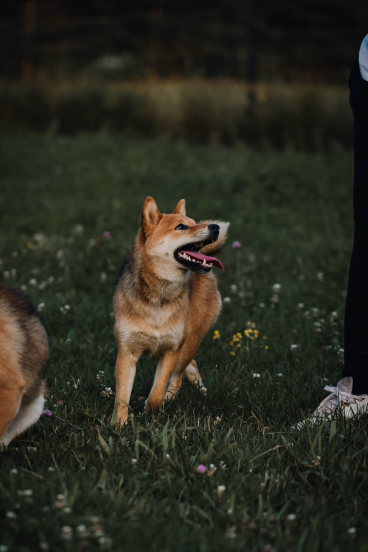
There is something people quickly discover when they bring a Shiba Inu home: this little dog has a rather impressive opinion of its own.
You can call its name. You can repeat a command. You can even offer a perfectly delicious treat. And your Shiba may look directly at you, consider the situation, and decide that whatever you are suggesting simply isn't worth its time.
Welcome to life with a Shiba Inu. The breed is often described as stubborn, independent, difficult to train or even cat-like. Some of these descriptions contain a little truth, but they do not tell the whole story. Behind that confident expression is a Japanese native breed with a long history as a small-game hunting dog, keen senses and a temperament shaped by generations of selection.
To understand the Shiba Inu, we need to look beyond obedience. We need to understand the mind behind the beautiful face.
1. A hunter before a companion

The Shiba Inu developed in Japan as a small, agile hunting dog. In mountainous and brush-covered country, dogs of this type were used to find and flush small game and birds. The work called for alertness, agility, stamina, keen senses and the ability to function in challenging terrain.
It is worth remembering that Japan's native dogs were not always uniform in type or use. Regional populations developed in different areas, and the modern Shiba emerged through the preservation and consolidation of these native dogs. It would be too simple to imagine one identical job description for every dog across every region.
Still, the historical context matters. The Shiba was not developed solely to wait for human instructions. It needed to notice movement, investigate scent, negotiate difficult ground and respond to its environment. Those abilities help explain why many Shibas today are curious, alert and strongly interested in what is happening around them.
2. Independence is not stupidity
One of the biggest misunderstandings about Shibas is that they are difficult to train because they are stubborn. A more useful way to look at it is this: a dog can understand a cue without finding the proposed activity rewarding at that particular moment.
Shibas can learn routines, cues and household rules. They may also be highly observant about patterns in their environment. But learning and automatically complying are not the same thing. A dog's response depends on motivation, reinforcement history, distractions, stress and the individual relationship with the person asking.
The practical lesson is not to give up on training. It is to make training worthwhile. Use rewards the individual dog values, keep sessions short and clear, reinforce the behaviours you want and practise in gradually more distracting settings. Consistency matters; so does making sure the dog has a reason to participate.
You are not negotiating with a dog that cannot understand you. You are working with an individual whose priorities may not always match yours. Occasionally, those priorities involve a suspicious leaf on the other side of the garden.
3. Intelligence comes in different forms

We often measure canine intelligence by obedience: how quickly does a dog sit, how reliably does it come when called, and how many tricks can it perform? But intelligence is not one single ability. Dogs learn through association, observation, memory, scent, social information and problem-solving, and individual dogs show different strengths.
A Shiba may quickly learn which cupboard contains the treats, which family member is most likely to share food, what time the morning walk usually happens and which sounds mean someone is preparing to leave. That kind of observation is useful, but it also means Shibas benefit from appropriate mental outlets.
Scent games, food puzzles, reward-based training, safe exploration and age-appropriate problem-solving activities can make daily life more satisfying. A bored Shiba is rarely an improvement on an occupied one.
4. The Shiba scream: drama or communication?

Few things are as memorable as hearing a Shiba scream for the first time. The sound can be startling, especially when it comes from a compact dog who otherwise looks perfectly composed.
The so-called Shiba scream is a vocal response, not a defining requirement of the breed and not something every Shiba does. Dogs may vocalize during excitement, frustration, fear, anticipation or discomfort. The situation and the rest of the dog's body language matter.
Some Shibas become vocal during bathing, nail trimming or other handling. Others make noise when highly excited or frustrated. Do not assume that every scream is harmless theatrics. If the dog shows signs of fear, pain or distress, pause and assess what is happening rather than turning the moment into entertainment.
Look at posture, facial tension, ears, tail, attempts to move away and the circumstances surrounding the sound. Vocalization is only one part of communication; the whole dog tells the story.
5. Selective hearing and the recall problem

Here is where many new Shiba owners discover that training videos have left out a few important details: recall. A Shiba may come running when called in the kitchen, respond beautifully in the backyard and then appear to forget its name when a squirrel enters the picture.
A strong interest in scent, movement and the environment can make outdoor recall challenging. But prey interest is not the only factor: training history, age, arousal, fear, competing rewards and the setting all influence whether a dog responds.
Reliable recall is built gradually. Start in low-distraction environments, reward generously, increase difficulty in small steps and avoid repeatedly calling when you cannot reinforce the response. A long line can provide practice and safety while skills develop.
Until recall is dependable in the specific environment, use a leash or a secure, appropriately fenced area. A Shiba should not be allowed off leash in an unsecured place simply because it came back beautifully three times yesterday. Yesterday's performance is not a lifetime guarantee.
6. The Instagram Shiba versus the real Shiba
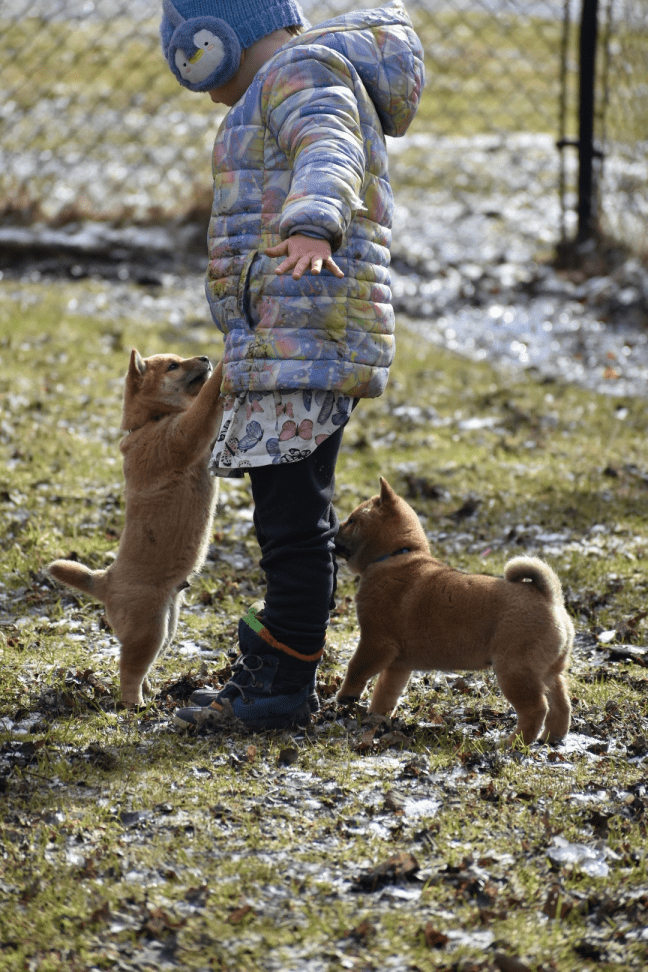
Social media has helped introduce the Shiba Inu to people around the world. It has also created some unrealistic expectations. The internet shows beautifully groomed dogs sitting politely in cafés, wearing outfits and posing for photographs. It does not always show the preparation, training, management and individual temperament behind those moments.
Shibas vary. Some are reserved with strangers; some are outgoing. Some are selective about canine friendships; others enjoy the company of familiar dogs. Some love close physical affection, while others prefer to choose when and how they interact.
Responsible breeding should aim for stable, confident dogs with sound temperaments, while respecting the characteristic nature of the breed. Natural independence should not be confused with fearfulness, poor socialization or aggression. Nor should the phrase 'that's just a Shiba' be used to excuse behaviour that needs thoughtful management or professional help.
7. Living with a Shiba: what owners should understand

At Last Samurai Kennel, we believe understanding a breed before bringing a puppy home is just as important as choosing the right puppy. The Shiba Inu may not be the right choice for someone seeking an endlessly compliant dog. For the right household, however, the breed offers a fascinating combination of intelligence, confidence, curiosity and personality.
· Socialization matters. Provide positive, age-appropriate exposure to people, places, sounds, surfaces and everyday handling. Socialization is not forcing a puppy to greet everyone.
· Training should be consistent. Use clear cues, meaningful rewards and short sessions. Practise around distractions gradually.
· Management is part of responsible ownership. Secure fencing, leash awareness and prevention of rehearsed unwanted behaviour are essential.
· Mental stimulation matters. Walks are valuable, but sniffing, exploring, learning and problem-solving are important too.
· Respect the individual dog. Not every Shiba has the same social preferences, energy level or tolerance for handling.
8. Preserving the mind, not just the appearance

This brings us back to something we discussed in Part 1: why Japan still matters. Preserving the Shiba Inu means preserving more than coat, colour, proportions or expression. Temperament is part of breed type.
In the Japanese native-dog preservation tradition, three qualities are often discussed: kan-i, ryosei and soboku. These terms are not simple training labels. They describe an ideal of spirited dignity or boldness, good nature, and natural simplicity or unpretentiousness. English translations vary, and the words are best understood as a connected description of character rather than three boxes a dog must tick.
The FCI Shiba standard describes the breed as faithful, with keen senses and great alertness. These descriptions sit comfortably alongside the broader preservation ideal: a Shiba should be confident and alert, with sound character. Independence does not mean instability, and a primitive heritage is never an excuse for poor temperament or irresponsible breeding.
As breeders, our responsibility is to understand the difference. We should not breed away the character that makes the Shiba Inu a Shiba Inu. Equally, we should select for soundness and stable, manageable temperaments so these dogs can thrive in modern homes.
A beautiful Shiba with correct structure and expression is wonderful. A beautiful Shiba with sound temperament, confidence and the ability to live successfully alongside people is something worth preserving.
A final thought from Last Samurai Kennel

If you live with a Shiba, you probably already know that you do not share your home with a dog that simply follows instructions. You share your home with a clever, occasionally opinionated Japanese dog who has its own ideas about how the day should unfold.
The goal is not to turn a Shiba into something it was never meant to be. It is to understand the breed, appreciate its natural characteristics and raise a dog that can thrive in the modern world without losing the qualities that make it special.
A Shiba Inu does not need to lose its independence to become a wonderful companion. It needs an owner who understands it.
At Last Samurai Kennel, that understanding begins long before a puppy leaves our home.

Comments