THE PUPPY’S DIARIES. PART 1: The Beginning - A Puppy Is Born, The first weeks that shape a lifetime
A personal look inside the whelping room at Last Samurai Kennel
Before the First Breath
Long before tiny paws begin exploring the world, a breeder’s work is already well underway. Pregnancy is a time for preparation, observation and planning. The whelping area needs to be clean, quiet, safe and comfortably prepared, with supplies close at hand and a veterinary plan in place.
I prepare for the birth well before the first puppy arrives. That means knowing the dam’s normal behaviour, keeping track of her progress, having emergency veterinary contact information ready and making sure the essentials are within reach. There is no prize for trying to find clean towels, a thermometer or the vet’s phone number while a puppy is on its way.
Even with experience, every litter deserves attention as an individual. No two pregnancies or deliveries are exactly alike, and responsible breeding means being prepared for the ordinary and the unexpected.
Welcome to the World
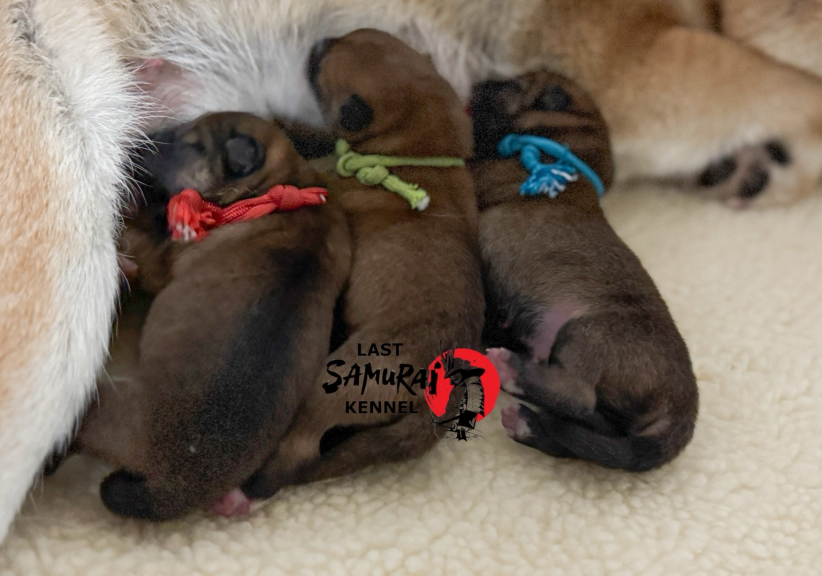
Newborn puppies arrive with very limited abilities. They cannot see or hear yet, and they depend entirely on their mother and their environment for warmth, nourishment and care. Their world is wonderfully simple: find Mum, find milk, stay warm and sleep.
A healthy newborn spends much of the day nursing and sleeping. The breeder’s job is to observe closely without interfering unnecessarily: check that each puppy is nursing, monitor weight, keep the bedding clean and make sure the mother is comfortable and attentive.

The First Two Weeks
The first two weeks are often called the neonatal period. Puppies’ eyes and ear canals remain closed, movement is limited, and their ability to regulate body temperature is immature. They rely on their mother for warmth and stimulation, and on the breeder to make sure their basic needs are being met.
Daily weight checks are one of the simplest and most useful tools available to a breeder. A steady pattern of growth is reassuring; poor weight gain, weakness, persistent crying, difficulty nursing or unusual separation from the litter deserves prompt attention.
This is also a time when cleanliness and temperature matter enormously. The whelping area must be kept dry and comfortable, while always allowing the mother and puppies enough room to move away from supplemental heat if they become too warm.

When Nature Needs a Helping Hand: Preparing for the Unexpected
Not every birth follows the textbook. A puppy may need help getting started, a mother may experience complications during or after delivery, or a newborn may struggle to nurse or maintain body temperature. These situations can develop quickly, which is why preparation is part of responsible breeding—not an optional extra.
Before whelping, I want a clear plan for veterinary assistance, including where to go after hours and how to reach help quickly. A properly stocked whelping kit, clean towels, a reliable thermometer, a suitable scale, safe warming equipment and written emergency contacts are practical essentials. Equipment is not a substitute for veterinary care; it simply helps make the first response more organized.
Warning signs can include prolonged or difficult labour, a mother who appears unwell, heavy bleeding, foul-smelling discharge, fever, severe pain, neglect of the puppies, a newborn that is cold or weak, persistent crying, breathing difficulty or an inability to nurse. These are reasons to contact a veterinarian promptly. When in doubt, call. Waiting to see whether a struggling newborn improves can cost valuable time.
Supplemental feeding may sometimes be necessary, but it should be guided by a veterinarian or an experienced neonatal-care professional. The right formula, technique, amount and frequency matter; feeding a weak or chilled puppy without appropriate assessment can be dangerous.

The less visible side of breeding can involve long nights, careful record-keeping, repeated checks and difficult decisions. It is not always picturesque. Sometimes it means sitting beside the whelping box instead of sleeping, because the puppies need monitoring.
Your social calendar can wait. Your puppies cannot.
Weeks Two to Four
As puppies approach the second and third weeks, small but important changes begin. Eyes open, hearing develops, movement becomes more purposeful, and the world starts to expand. They begin to lift themselves, wobble around and investigate their surroundings.
By the time they are moving more confidently, they start interacting with their littermates in new ways. They nuzzle, climb over one another, vocalize and begin to explore the edges of their little world. Their mother remains central to their care, but the puppies are becoming more aware and active.
This is a gradual process, not a race. Development varies between puppies and between litters. I watch the individuals rather than expecting every puppy to reach every milestone on the same day.


The Breeder’s Role
During these early weeks, much of good breeding is careful observation. I am watching how each puppy grows, nurses, sleeps and responds. I am also watching the mother: her appetite, comfort, behaviour and willingness to care for the litter.
The practical work includes keeping records, monitoring weight, maintaining a clean environment, arranging appropriate veterinary care and making adjustments as the puppies develop. Gentle, age-appropriate handling helps puppies become familiar with human contact, but it should always respect their needs for rest, warmth and time with their mother.
It is tempting to rush ahead to the fun parts—playing, photographs and visitors. There will be plenty of time for those. In the beginning, consistency and quiet attention matter more than a busy schedule.
Why Mum and Littermates Matter
A puppy’s mother provides more than milk. She offers warmth, security and the earliest lessons in canine communication. As puppies become more active, their interactions with their mother and littermates begin laying the groundwork for social skills.
They learn through contact, repetition and observation. The mother’s presence and the litter environment cannot be replaced by human attention alone. Our role is to support that natural development, keep the environment safe and introduce appropriate experiences when the puppies are ready.
Every puppy needs room to develop at an individual pace. Some are more vigorous, some quieter; some are quick to investigate, while others take their time. The aim is not to make every puppy behave identically, but to give each one a healthy start.
Every Puppy Has a Story
By the end of the first month, the tiny newborns who once depended on Mum for absolutely everything are beginning to look like little dogs with opinions. They are growing stronger, becoming more curious and starting to show the first hints of their individual personalities.
There is still a great deal ahead: socialization, new experiences, learning through play, grooming preparation and eventually the transition to their new families. Those stages deserve their own attention, because raising a well-adjusted puppy is a process built one small experience at a time.
For now, the most important work is giving every puppy a safe, healthy beginning—with a knowledgeable breeder watching, learning and ready to step in when needed.
What’s Next?
In Part 2, we follow the puppies as their world gets bigger: growing up at the breeder’s home, learning from their mother and littermates, meeting new people and discovering the everyday sights, sounds and experiences that help prepare them for life beyond the whelping area.
The Puppy’s Journey continues…


Comments