YOUR PUPPY DIARIES. PART 4 - Learning to Live Together: The Everyday Lessons That Matter
Because being adorable is a wonderful quality, but it does not automatically teach a puppy how to behave in a human household.
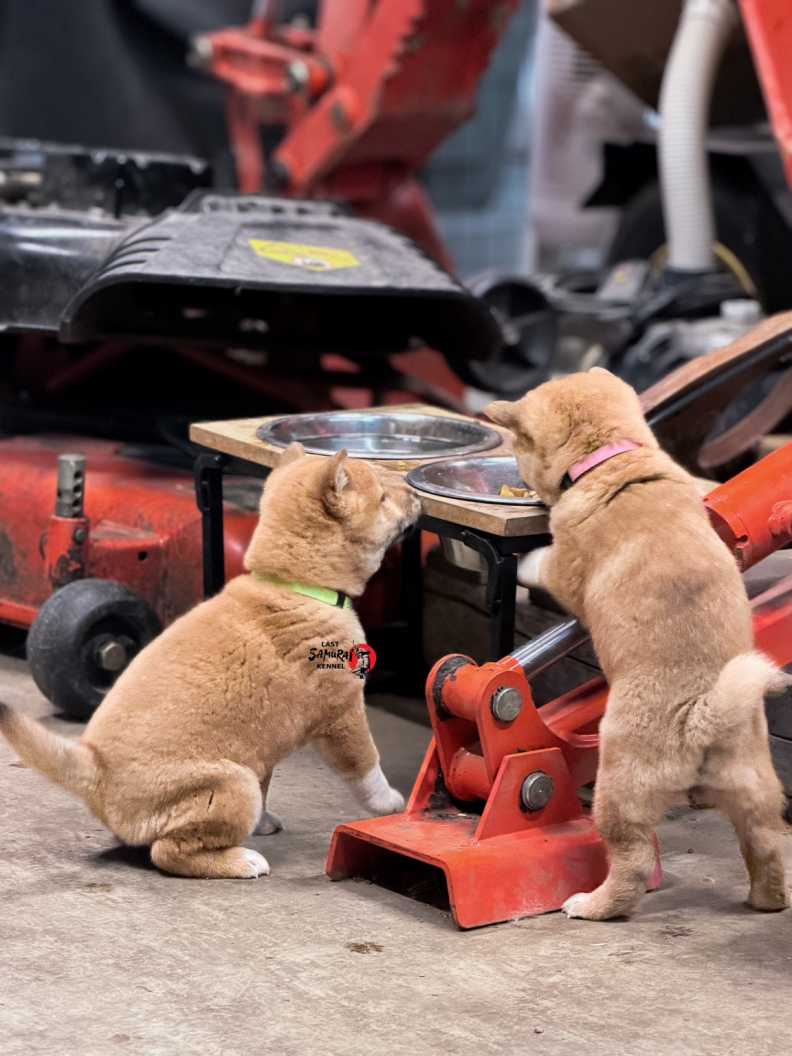
A curious puppy is always finding something new to investigate.
By the time your puppy arrives home, you have probably spent weeks preparing. The bed is ready, the toys are waiting, the food has been purchased, and everyone has imagined how lovely life together is going to be. Then reality arrives. Your puppy discovers that shoelaces are fascinating, the corner of the rug is apparently edible, the garden contains several exciting places to dig, and the concept of going outside to do their business is still very much under discussion. Welcome to puppy ownership. The first few weeks at home are about much more than teaching a puppy to sit or respond to their name. Your puppy is learning how to live in your world, while you are learning how to understand theirs.This is where everyday habits begin to take shape. How your puppy rests, plays, communicates, handles frustration, accepts grooming, and responds to household routines will all contribute to the adult dog they eventually become. And no, you do not need to teach everything in one weekend. In fact, trying to do so is a fairly reliable way to exhaust yourself and confuse the puppy. The secret is to make learning part of ordinary life.
1. Start With the Basics: Routine, Rest and Consistency
Puppies thrive when their days have some predictability.

They need opportunities to eat, drink, play, explore, go outside, learn, and—perhaps most importantly—sleep. Young puppies need a considerable amount of rest, and an overtired puppy can quickly become a little furry whirlwind with questionable decision-making skills.
If your puppy suddenly becomes unusually bitey, frantic, unable to settle, or interested in absolutely everything except listening to you, consider whether they need a nap rather than another activity.
A simple daily rhythm can make a tremendous difference:
· Take your puppy outside after waking, eating, drinking, and playing.
· Offer meals at reasonably consistent times.
· Include short periods of play and gentle training.
· Provide appropriate toys and enrichment.
· Build in quiet time and opportunities to sleep.
· Keep bedtime and morning routines as predictable as possible.
Consistency does not mean every day must follow a military timetable. Life happens. What matters is that your puppy gradually learns what to expect and that the people in the household are reasonably consistent with the rules.
If one person allows the puppy to jump on the sofa while another scolds them for doing exactly the same thing, the puppy is not being stubborn. They are receiving conflicting instructions.
Decide which household rules matter to your family, communicate them clearly, and make sure everyone follows the same general approach.
2. House Training: The Art of Being Faster Than a Puppy
Let's talk about potty training.
As a breeder, I have cleaned more puppy messes than I care to count. It is part of the job. But even with experience, I can assure you that nobody enjoys discovering a surprise puddle after confidently announcing that their puppy has finally mastered house training.
Puppies are not born understanding where humans would prefer them to relieve themselves. They need to learn, and that learning takes time.
The most effective approach is supervision, routine, and rewarding the behaviour you want.
Take your puppy outside frequently, especially:
· Immediately after waking.
· Shortly after meals and drinking.
· After energetic play.
· After exciting interactions.
· Before bedtime.
· Whenever you notice sniffing, circling, wandering away, or suddenly becoming restless.
When your puppy goes in the right place, praise and reward them promptly. Make the experience positive and predictable.
Inside the house, supervision is essential. If you cannot actively watch your puppy, use a safe, appropriately sized confinement area or another suitable arrangement. Giving a young puppy unrestricted access to the entire house is often less freedom than they need and considerably more opportunity for trouble than you intended.
Accidents will happen. Clean them thoroughly with an appropriate enzymatic cleaner, review the routine, and move on.
Punishing a puppy for an accident does not teach them where to go. It can teach them that relieving themselves in front of you is something to hide.
House training is a skill we teach, not a test a puppy passes or fails.
For a more detailed explanation, read Potty Business Troubles and Potty Training.
3. Crate Training: Creating a Place to Rest
A positive crate experience begins with helping the puppy feel safe and comfortable.
A crate can be an extremely useful part of puppy life when introduced thoughtfully.
It can provide a safe resting place, help with household management, support travel, and give your puppy somewhere quiet to relax. But it should never become a place of punishment or a substitute for exercise, companionship, and appropriate attention.
The first mistake people sometimes make is expecting a puppy to walk into a crate, settle down, and happily spend several hours there simply because the door has been closed.
Imagine being introduced to a new bedroom by someone you barely know, placed inside, and told that you should find the whole arrangement perfectly reasonable.
Your puppy may need a little convincing.
Start by making the crate inviting. Allow your puppy to investigate it voluntarily. Place treats or a favourite toy inside, offer meals nearby or inside when appropriate, and practise short, positive sessions.
Gradually build duration as your puppy becomes comfortable.
Keep the crate in a suitable location where your puppy can feel included in household life. Make sure it is appropriately sized, comfortable, and used in a way that meets your puppy's needs.
Some puppies take to crate training quickly. Others require more patience. If your puppy is showing signs of significant distress, do not simply leave them to cry it out. Reconsider the pace of training and seek qualified help if needed.
The goal is to create a place your puppy feels comfortable using—not a tiny prison with a blanket.
You can find the step-by-step approach in The Puppy Diaries: How to Crate-Train Your Puppy Without the Drama.
4. Those Tiny Teeth: Teaching Bite Inhibition
Children and puppies need calm, closely supervised interactions.
At some point, almost every puppy owner looks down at their hands and wonders how something so small can have so many teeth.

Puppies explore the world with their mouths. They chew, investigate, play, and interact using their teeth. This is normal puppy behaviour, but it does not mean we should allow them to treat human fingers, clothing, or ankles as acceptable chew toys.
Our job is to teach them what is appropriate.
Provide suitable chew toys and redirect biting toward those alternatives. If play becomes too rough, calmly pause the interaction. Give your puppy a moment to settle before trying again.
Avoid shouting, hitting, holding the muzzle shut, or using other physical corrections. These methods can create fear and frustration without teaching the puppy what you would prefer them to do.
Remember that puppies also become mouthier when they are tired, overstimulated, or struggling to regulate their excitement. Sometimes the best training decision is to end the game and offer a quiet rest.
Children need guidance, too. Teach them not to wave their hands around a puppy's face, encourage rough play, or run away while squealing when the puppy grabs their clothing. Those reactions can turn an ordinary interaction into an exciting game of chase and bite.

Supervise interactions closely and give both children and puppies a way to take breaks.
Learning to control the pressure of their mouths takes time. Be patient, consistent, and generous with appropriate alternatives.
For more detailed guidance, see Teaching Your Puppy Bite Inhibition: Tiny Teeth, Lifelong Lessons.
5. Playtime: Learning When Enough Is Enough
A calm interaction with another dog can be just as valuable as energetic play.
Play is an important part of puppy development. It provides exercise, enrichment, opportunities to explore, and a chance to build relationships with people and suitable canine companions.

But more play is not always better.
A puppy who is bouncing off the walls is not necessarily a puppy who needs another hour of entertainment. Sometimes they need help slowing down.

Keep play sessions appropriate for your puppy's age, size, physical development, and temperament. Offer a variety of toys and activities, and let your puppy enjoy quiet exploration as well as energetic games.
When puppies play with other dogs, pay attention to the quality of the interaction.
Good play should be reasonably balanced. Both puppies should have opportunities to participate, pause, and move away. Watch for changes in body language, repeated attempts to escape, or one puppy constantly overwhelming the other.
Not every dog needs to become your puppy's best friend. A calm walk past another dog without a greeting can be a perfectly successful social experience.
Teach your puppy that play has a beginning and an end. Practise short pauses, reward calm behaviour, and help them learn to settle after excitement.
This is particularly useful for energetic, sociable breeds such as Samoyeds, but Shiba Inu families will benefit from it just as much. Every puppy needs to learn how to switch off.
For more on choosing appropriate activities and recognizing when play has gone far enough, visit Puppy Playtime: How Much Is Enough?.
6. Handling and Grooming: Make It Part of Everyday Life
Early grooming-table experiences should be short, calm and rewarding.
Samoyed puppies can learn that gentle grooming and handling are ordinary parts of life.
One of the most valuable lessons you can teach your puppy is that being handled does not have to be a big event.
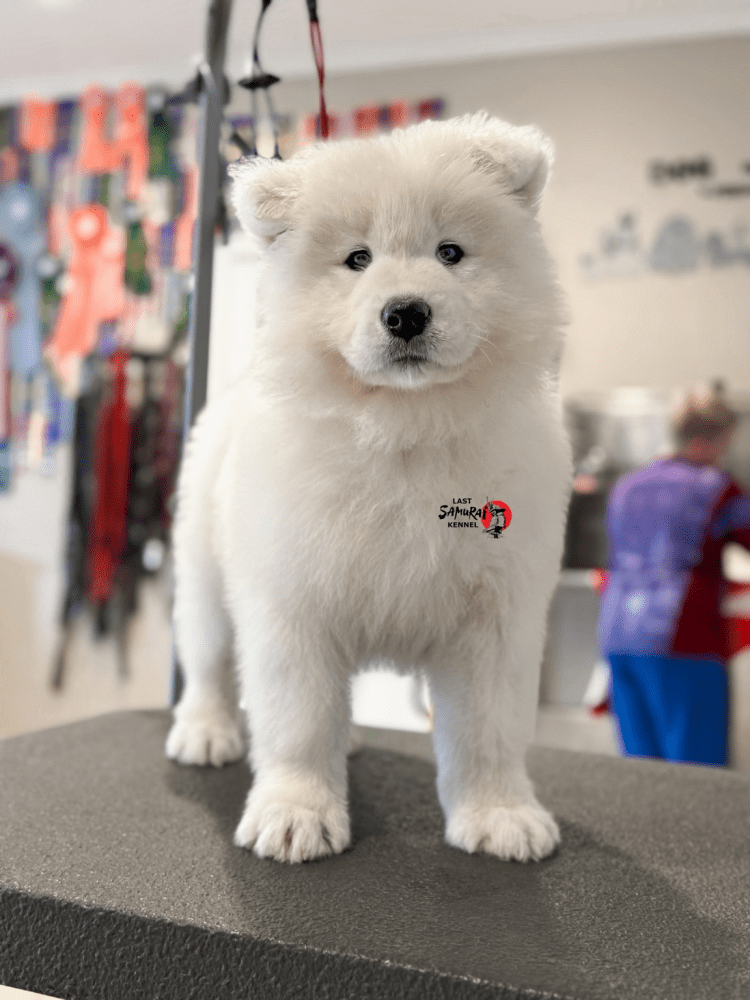
At some point, somebody will need to examine their ears, check their teeth, trim their nails, brush their coat, or help them through a veterinary examination.
It is much easier when your dog has learned from an early age that gentle handling can be a normal and pleasant part of life.
Begin with very short sessions.
Touch a paw, offer a treat, and stop. Gently look at an ear, reward your puppy, and move on. Introduce a soft brush without expecting a complete grooming session on the first attempt.
Gradually build up as your puppy becomes comfortable.
For Samoyed families, this is especially important. That beautiful double coat does not maintain itself, no matter how convincingly your Samoyed looks at you while lying beside the grooming table.

Regular brushing, coat checks, bathing, and thorough drying are part of responsible ownership. Starting early helps make these routines more familiar.
Shiba Inus also benefit from positive grooming preparation, including brushing, paw handling, and nail care.
The important point is to work at your puppy's pace. Do not force long handling sessions or turn grooming into a wrestling match. If your puppy becomes uncomfortable, make the next step easier and rebuild gradually.
A dog who trusts you during routine care has an important life skill.
Our Training and Behavioural Issues section includes further guidance on teaching puppies to enjoy being handled.
7. Teach the Behaviour You Want to See

One of the easiest mistakes to make with a puppy is spending all day correcting unwanted behaviour while forgetting to reward the good behaviour happening right in front of you.

Your puppy lies quietly beside you? Lovely. Reward that.
Your puppy looks at another dog without pulling toward it? Excellent. Let them know.
Your puppy chooses a toy instead of your slipper? That deserves recognition, too.
Dogs learn through the consequences of their actions. When we notice and reward the behaviours we want to see again, we give puppies useful information about what works.
You do not need to turn every moment into a formal training session. Everyday life provides plenty of opportunities.
Practise simple skills such as:
· Responding to their name.
· Coming when called in safe, controlled situations.
· Waiting briefly before going through a doorway.
· Settling on a bed or mat.
· Releasing a toy in exchange for something rewarding.
· Walking on a loose leash.
· Checking in with you when something interesting happens.
Keep sessions short and positive. Puppies have limited attention spans, and there is no prize for making a five-minute lesson last twenty minutes.
Most importantly, remember that training is not just about commands. It is about building communication and helping your puppy understand how to succeed in the environment you share.
8. Give Your Puppy a Chance to Get It Right
Curious puppies will investigate whatever is within reach—management helps prevent unwanted habits.
Management is an important part of raising a puppy, and it is sometimes overlooked.
If you know your puppy is likely to chew shoes, put the shoes away. If the garbage is irresistible, secure the garbage. If your puppy cannot yet be trusted around the house unsupervised, use gates or a suitable puppy-safe area.
This is not cheating.
It is setting your puppy up for success while they are still learning.
Every time a puppy practises a behaviour, that behaviour can become more familiar. Preventing unwanted habits from becoming daily entertainment is often much easier than trying to undo them later.
Give your puppy appropriate choices, supervise when necessary, and gradually increase freedom as they demonstrate that they are ready.
And please remember that a puppy does not understand the value of your favourite shoes, the importance of an expensive rug, or the emotional significance of the remote control.
To them, these are simply objects that have been left conveniently within reach.
9. Progress Is Not a Straight Line
New environments offer opportunities to practise at a puppy's own pace.
There will be days when you feel that everything is coming together.
Your puppy sleeps through the night, remembers where the bathroom is, responds to their name, and spends an entire afternoon behaving like the wonderful companion you imagined.
Then the next morning, they may forget every lesson, discover a new way to cause trouble, and look at you as though you have never met.
This is normal.
Puppies are developing physically, mentally, and emotionally. Their ability to focus, manage excitement, and respond consistently will change as they mature.
Some days will be easier than others. A skill that works beautifully in your living room may be much harder in the garden, around visitors, or when another dog is nearby.
When that happens, reduce the difficulty. Return to a quieter environment, use rewards generously, and practise again.
Avoid interpreting every setback as stubbornness or defiance. Your puppy is still learning how to navigate a complicated human world.
You are learning, too.
And that is perfectly all right.
A Final Thought: You Are Building a Relationship
Living together is not about creating a perfectly obedient puppy who never makes a mistake.

It is about teaching your dog how to share your home safely and comfortably, while learning to understand their needs, communication, and individual personality.
There will be muddy paws, interrupted sleep, chewed objects, unexpected puddles, and moments when you question your decision to bring a puppy into your previously tidy home.
There will also be quiet moments when your puppy falls asleep beside you, greets you as though you have been gone for a year, or looks to you for reassurance when something unfamiliar appears.
Those moments are part of the process, too.
Be patient. Be consistent. Celebrate the small improvements, and remember that your puppy does not need to learn everything today.
The relationship you are building will last much longer than the puppy stage.
And just when you think you have finally figured everything out, your puppy will grow into an adolescent dog and introduce you to an entirely new chapter. But that is a story for Part 5.
From our kennel and family to your home, we wish you patience, a good supply of treats, and shoes that are safely out of reach.
Gentle, positive experiences help build trust.


Comments